
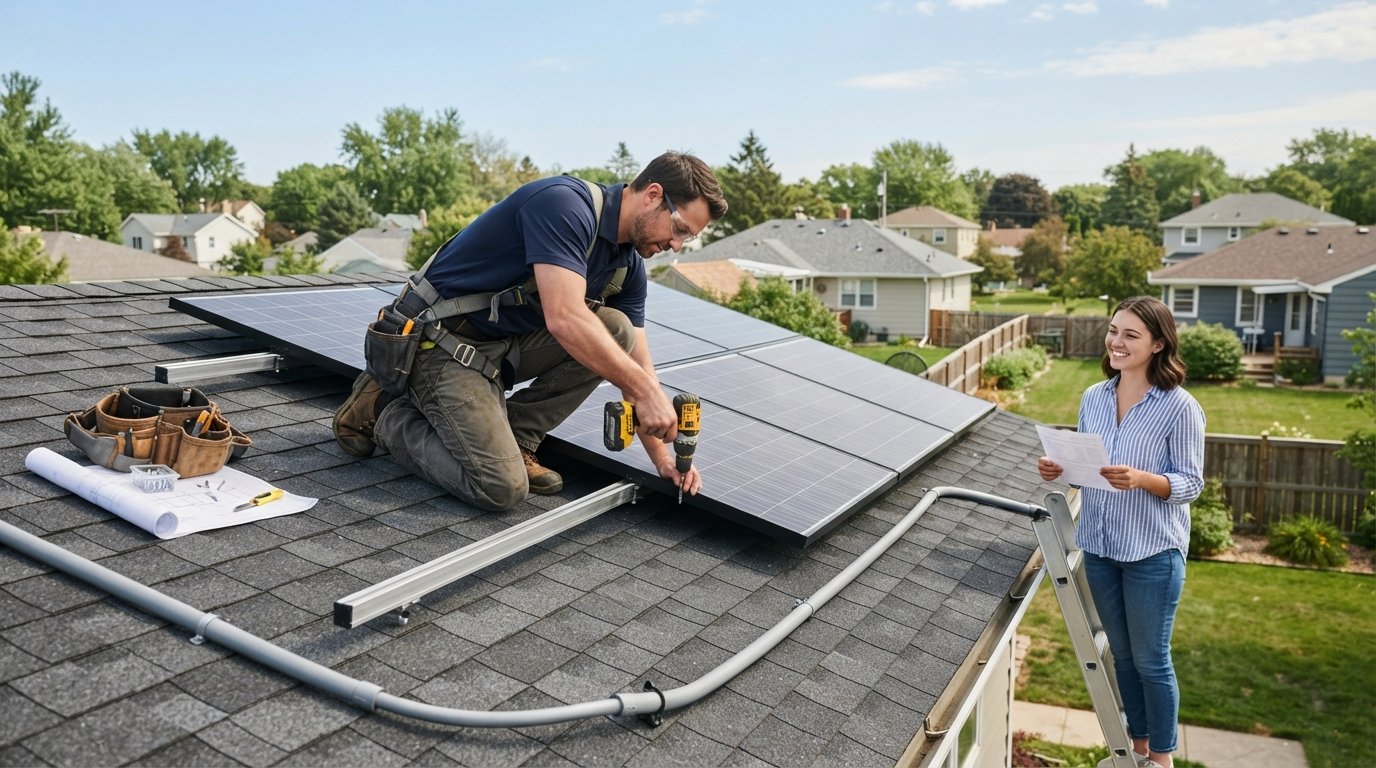
Solar Panel Installation Permits and Regulations: A Homeowner Guide
Understand solar panel installation permits and regulations to avoid fines, ensure safety, and speed up your project. Get the essential steps inside.
By Eric Andrew
Learn more about Solar Panel Installation and Repair for guides, costs, and what to expect.
Compare Solar Panel Installation and Repair Pros Near You

Enter your ZIP code to compare top-rated local professionals and request free quotes.
You have decided to go solar. You have compared quotes, picked efficient panels, and found a contractor you trust. Then the conversation turns to permits, and suddenly the project feels less like clean energy and more like a pile of paperwork. Do not let this step intimidate you. Solar panel installation permits and regulations are a normal, necessary part of the process. They exist to keep your roof safe, your electrical system sound, and your investment protected. Navigating these requirements correctly not only ensures your system operates legally, but it also prevents costly delays, potential fines, and headaches during a future home sale.
In this guide, we break down why permits matter, what the typical approval process looks like, which regulations vary by location, and how to work with your contractor to handle every requirement smoothly. By the end, you will know exactly what questions to ask and what to expect from your local building department, your utility company, and your solar installation team.
Why Solar Permits Matter for Your Home and Your Wallet
Some homeowners wonder if they can skip the permit process to save time or money. That approach is risky. A permit is not a bureaucratic hurdle; it is a safety mechanism. Building inspectors verify that your roof structure can handle the weight of the panels, that the mounting system is properly anchored, and that all electrical work meets the National Electrical Code (NEC). This protects you from fire hazards, electrical shocks, and structural failures.
Permits also protect your financial interests in several ways. First, most solar equipment warranties require professional installation that meets local codes. An unpermitted system can void those warranties. Second, homeowner's insurance policies often exclude damage from unpermitted work. If a fire starts due to faulty wiring and the insurer discovers no permit was pulled, your claim could be denied. Third, when you sell your home, the buyer's title search or home inspection will likely reveal an unpermitted solar array. This can delay the sale or force you to remove the system or pay for retroactive permits and inspections. In our guide on the solar panel installation process for homes, we walk through each stage, and permits are a core part of that journey.
Beyond safety and warranties, there is a legal factor. Building codes are local laws. Installing without a permit is a code violation, and local governments can levy fines, require system removal, or place a lien on your property. These consequences are far more expensive than the permit fee itself, which typically ranges from $100 to $500 depending on your municipality. When you view the permit as protection for your family, your home, and your bank account, the paperwork becomes a worthwhile investment.
The Typical Solar Permit Approval Process
While every city and county has its own specific procedures, most solar installations follow a similar approval path. Understanding this flow helps you set realistic timelines and know who handles each step. Your contractor should manage the permit application, but you should be aware of the stages so you can ask for updates and verify that all approvals are in place before the work begins.
Step 1: Site Assessment and System Design
Before any permit application is filed, your solar contractor must visit your property to assess your roof's condition, orientation, shading, and structural capacity. They will also review your electrical panel to determine if an upgrade is needed. This assessment informs the system design, including the number of panels, inverter type, and mounting layout. The design must comply with local zoning setbacks, fire codes that require clear pathways on the roof, and structural engineering standards. Your contractor will also confirm that your homeowner's association (HOA) rules, if applicable, allow solar panels, though many states have solar access laws that limit HOA restrictions.
Step 2: Permit Application Submission
Once the design is complete, your contractor submits a permit application to your local building department. This package typically includes:
- Site plan showing panel placement, roof dimensions, and equipment locations
- Structural calculations demonstrating roof load capacity
- Electrical diagrams detailing wiring, inverters, and disconnects
- Manufacturer spec sheets for all major components
- Proof of contractor licensing and insurance
The building department reviews the application for code compliance. Some jurisdictions offer over-the-counter permits for standard residential systems, which can be approved in a few days. Larger or more complex systems may require a full plan review by a structural engineer or electrical inspector, which can take one to four weeks. During this review, the city may request revisions or additional documentation, so communication with your contractor is key.
Step 3: Permit Issuance and Inspection Scheduling
After the permit is approved, you will receive a permit card or number that must be displayed at the job site. Your contractor can now schedule the installation. Once the panels and electrical components are in place, the building department conducts a final inspection. The inspector checks that the installation matches the approved plans, that all wiring is properly grounded, that the mounting system is secure, and that clearances meet fire safety codes. If the inspector flags any issues, your contractor must correct them and request a re-inspection. Only after the inspection passes is your system legally operational.
Step 4: Utility Approval and Interconnection
After the building inspection passes, you need permission to connect your solar system to the electrical grid. This process, called interconnection, is handled by your utility company. You or your contractor will file an interconnection application that includes the approved building permit, inspection sign-off, and equipment specifications. The utility reviews the application to ensure your system cannot backfeed power unsafely during an outage. Once approved, you can turn on your system. This step can take anywhere from one to six weeks depending on the utility, so factor that into your timeline when you expect to start saving on electricity bills. Many homeowners are surprised to learn that the building permit is only half the regulatory battle; the utility approval is equally critical. Your contractor should coordinate both applications to avoid delays.
Key Solar Regulations and Codes You Need to Know
Solar panel installation permits and regulations are not uniform across the United States. While the National Electrical Code (NEC) provides a baseline, states and localities adopt amendments and add their own rules. Here are the most common regulatory areas that affect residential solar projects.
Zoning and Setback Requirements
Many municipalities regulate where solar panels can be placed on your roof. Fire departments often require a certain amount of clear space on the roof for firefighters to access vents and walk safely. These setbacks, typically 18 to 36 inches from the ridge or edges, can reduce the number of panels you can install. Some historic districts or neighborhoods with design guidelines may impose additional restrictions, though most state laws limit unreasonable HOA bans. Your contractor's site survey will account for these setbacks, but you should ask upfront if your roof has any limitations that could affect system size.
Electrical Code Requirements
The NEC, specifically Article 690, governs solar photovoltaic systems. Key requirements include a rapid shutdown function that de-energizes the system in an emergency, proper labeling of disconnects, and grounding of all metal components. Many jurisdictions adopt the latest NEC edition, but some still operate on older versions. Your contractor must design the system to meet the specific code edition enforced in your area. This is not a DIY area; a professional installer will know the nuances of your local electrical inspector's expectations.
Structural and Wind Load Standards
Your roof must be able to support the added weight of solar panels, which can be 3 to 5 pounds per square foot. Local building codes specify minimum wind load ratings based on your region's hurricane or tornado risk. In coastal Florida, for example, panels must withstand 160 mph winds, while inland areas may have lower thresholds. Your contractor should provide structural calculations sealed by an engineer if your roof has unusual framing or is older. This is not a place to cut corners; an improperly mounted panel can become a projectile in a storm.
Historic Preservation Rules
If your home is in a designated historic district or is itself a historic landmark, you may need approval from a preservation board before installing solar panels. These boards often require panels to be less visible from the street, which may mean ground-mounted arrays or lower-profile panels. Some states have solar access laws that protect your right to install panels even in historic areas, but you may still need a design review. Start this process early, as preservation board meetings can be infrequent.
How to Avoid Common Permit and Regulation Pitfalls
The difference between a smooth solar project and a stressful one often comes down to how well you and your contractor handle the permitting process. Here are practical steps to keep your project on track.
First, choose a licensed and experienced solar contractor. A reputable installer will have strong relationships with local building departments and know the specific requirements in your city. Ask for references from recent installations in your area and check online reviews for any complaints about permit delays. Second, get everything in writing. Your contract should specify who is responsible for pulling permits, which party pays for permit fees, and what happens if the inspector requires changes that add cost. Third, stay in communication. Ask your contractor for a timeline that includes permit submission and approval dates. If the permit is taking longer than expected, call the building department yourself to follow up. Finally, do not let your contractor start work without a permit in hand. Some may try to expedite the job by beginning before approval, but this can lead to stop-work orders and fines.
Another common pitfall is failing to coordinate with your HOA. While many states limit HOA power to ban solar, your HOA can still require you to submit an application for approval to ensure your panels meet aesthetic guidelines. If you skip this step, you may face fines or be forced to relocate panels. Check your HOA covenants early in the process and submit the necessary paperwork alongside your building permit application. Similarly, if you live in a leased property or a condominium, you will need written permission from the property owner or board before any installations begin.
One of the best ways to avoid surprises is to work with a contractor who handles the entire regulatory process. At USremodel, we connect homeowners with vetted solar professionals who manage permits, inspections, and utility interconnection from start to finish. You can also consult resources like 180Remodel, a home improvement platform that offers guidance on solar and other renovation projects. Their expertise can help you understand what to expect from your local jurisdiction.
Regional Differences in Solar Permitting
Solar panel installation permits and regulations vary significantly across the country. California, for example, has adopted strict energy codes that require solar on many new homes, and its permitting process is streamlined through online portals in many cities. Texas, in contrast, has no statewide solar mandate, and permitting is handled entirely by local municipalities, which can range from fast and simple in cities like Austin to more complex in smaller counties. Arizona has a strong solar market with many jurisdictions offering expedited permits for standard systems, while states in the Northeast, like Massachusetts and New York, have robust incentive programs but also detailed structural requirements due to snow loads.
Your contractor should be familiar with your local jurisdiction's quirks. For instance, some cities require a separate electrical permit in addition to a building permit, while others combine them. Some require a licensed electrician to perform the final connection, even if the solar crew did the rest of the work. Ask your contractor to walk you through the specific permits they will pull for your project. This transparency helps you understand the timeline and costs.
Costs and Timelines: What to Budget For
Permit fees are a small part of your overall solar investment, but they are not the only cost. In some jurisdictions, you may need to pay for a structural engineer to review your roof and stamp the plans. This can add $300 to $800 to your project. If your electrical panel needs an upgrade to handle the solar input, that can cost an additional $1,000 to $3,000. While these are not permit fees per se, they are regulatory-driven costs that you should anticipate. Your contractor should provide a detailed quote that itemizes these expenses.
Timelines vary, but you can generally expect:
- Permit application review: 1 to 4 weeks
- Installation: 1 to 3 days
- Final inspection: 1 to 2 weeks after installation
- Utility interconnection approval: 1 to 6 weeks after inspection
In total, the entire process from permit submission to your system going live can take 4 to 12 weeks. This is why it is wise to start the paperwork as soon as you sign your contract. Do not wait until after installation to think about permits. A good contractor will begin the application process immediately, often before the equipment even arrives on the job site.
Final Thoughts on Navigating Solar Permits
Solar panel installation permits and regulations are a manageable part of going solar. They are not designed to be obstacles, but rather to ensure that your system is safe, reliable, and legal. By working with a qualified contractor, understanding the process, and staying proactive, you can avoid common pitfalls and enjoy the benefits of clean energy without unnecessary stress.
Remember that your contractor is your partner in this process. Do not hesitate to ask questions about permit status, inspection results, or utility deadlines. A reputable solar company will be transparent and communicative. If you are still in the planning phase, use our platform to get quotes from experienced solar installers in your area. They will handle the permitting and regulatory details, so you can focus on the exciting part: watching your electricity bills drop and your home's value rise.
Going solar is a significant investment, but with the right preparation, the journey through permits and regulations can be smooth and straightforward. Take the time to understand your local requirements, choose a contractor who values compliance, and soon you will be generating your own power with confidence.
Learn more about Solar Panel Installation and Repair for guides, costs, and what to expect.
Compare Solar Panel Installation and Repair Pros Near You
Enter your ZIP code to compare top-rated local professionals and request free quotes.