
Smart Kitchen Remodel: Plan Home Integration First
Plan your smart home integration during kitchen remodel to save money, avoid wiring mishaps, and create a connected kitchen that works for you.
By Peter Hubert
Learn more about Kitchen Remodel for guides, costs, and what to expect.
Compare Kitchen Remodel Pros Near You

Enter your ZIP code to compare top-rated local professionals and request free quotes.
Imagine walking into your kitchen and having the lights brighten as you approach, the coffee maker start brewing at your preferred time, and the oven preheat while you are still in the grocery store. This is no longer a scene from a futuristic film. It is the reality of a modern kitchen renovation. However, achieving this seamless level of convenience requires more than buying the latest gadgets. The key to a successful smart home integration during kitchen remodel lies in meticulous planning before the demolition crew arrives. Without early decisions on wiring, network infrastructure, and device placement, you risk ending up with a beautiful but disconnected space. This guide walks you through the critical steps to ensure your remodel delivers both beauty and brainpower.
Why You Must Plan Technology Before the Demolition
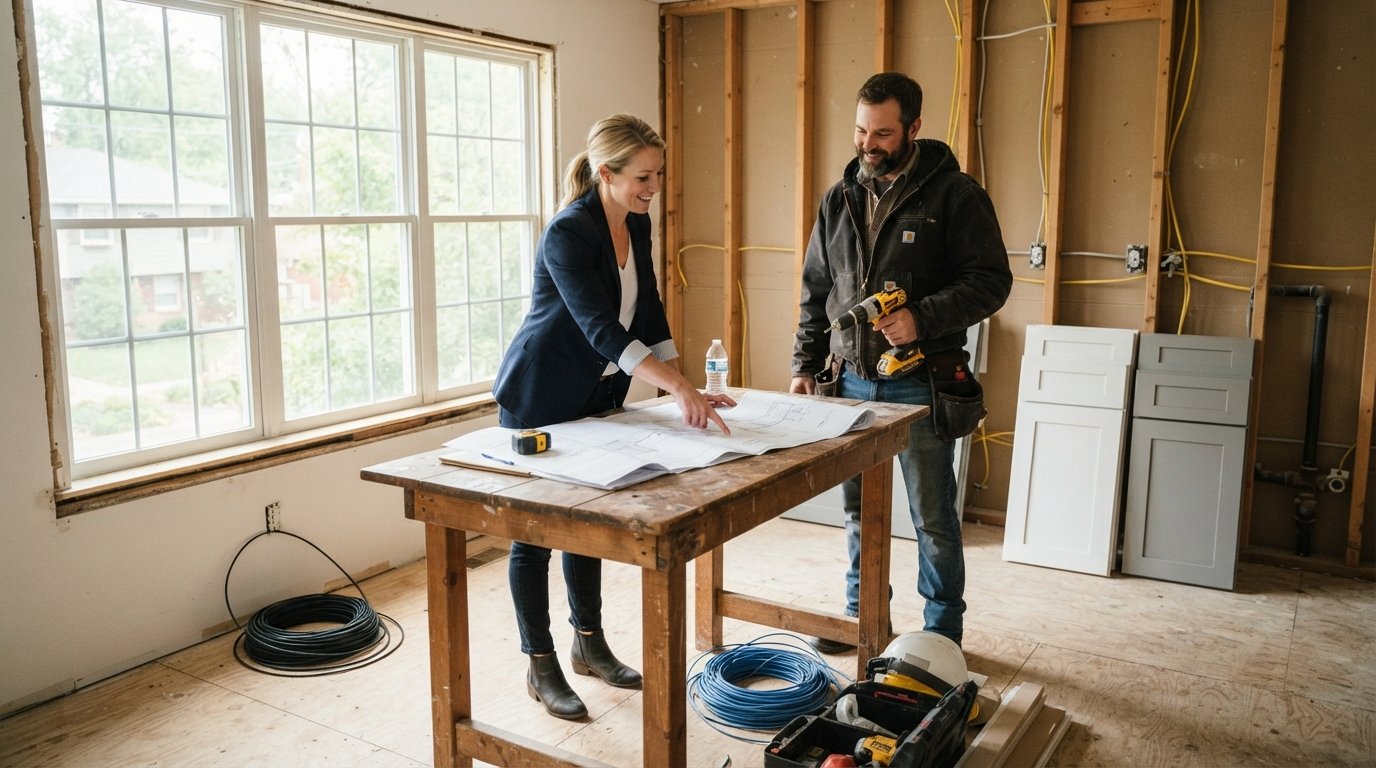
Many homeowners make the mistake of treating smart home technology as an afterthought, something to be added after cabinets and countertops are installed. This approach leads to visible wires, compromised Wi-Fi signals, and limited options for built-in devices. When you plan your technology during the design phase, you can hide infrastructure within walls and cabinetry, resulting in a clean and uncluttered look. The cost of adding rough-in electrical and low-voltage wiring now is significantly lower than retrofitting it later, which often involves cutting into drywall and disrupting finished surfaces.
Moreover, a well-executed smart home integration during kitchen remodel adds tangible value to your property. A kitchen equipped with smart lighting, automated climate control, and energy-efficient appliances appeals to modern buyers. It also enhances your daily lifestyle, offering convenience and energy savings. For example, smart sensors can adjust lighting based on natural daylight, and smart plugs can power down small appliances when not in use, reducing your electricity bill. To get the most from your investment, you need a clear roadmap that coordinates with your contractor and other trades. For a deeper dive into the entire renovation process, you might find our 2026 smart home remodel guide helpful as it covers the broader integration strategy for your whole house.
Establishing a Robust Network Foundation
Your smart kitchen devices are only as effective as the network they run on. A single, outdated router located in a corner of the living room will likely struggle to support the bandwidth demands of multiple cameras, voice assistants, and streaming-capable appliances. The first step is to assess your internet plan and router capabilities. If you have a large home or plan to install many devices, consider a mesh Wi-Fi system. These systems use multiple access points to provide consistent coverage throughout your home, eliminating dead zones in the kitchen.
For the most reliable connections, you should also plan for wired Ethernet connections. While most smart devices use Wi-Fi, having a wired backhaul for your mesh nodes or a dedicated access point in the kitchen ensures stable performance. This is especially important for devices that stream video, like smart displays or security cameras. During your remodel, ask your electrician to run Cat6 or Cat6a Ethernet cables from your main router or network switch to strategic locations in the kitchen. This includes behind the main counter area, near the pantry, and where you intend to place a smart display. These cables can be terminated in wall plates for a professional finish.
Key Network Considerations for Your Kitchen
- Mesh Wi-Fi System: Invest in a tri-band mesh system to handle multiple devices simultaneously without lag.
- Network Switch: Add a small unmanaged or managed switch near your router to easily connect wired devices like smart hubs and voice assistants.
- PoE (Power over Ethernet): For devices like security cameras or smart displays, PoE can supply power and data through a single cable, simplifying installation.
- Future-Proofing: Run extra Ethernet cables to the attic or basement to simplify future expansions of your smart home system.
Planning your network infrastructure now will save you from frustrating connectivity issues later. A strong network is the invisible backbone that allows all your smart devices to communicate with each other and with your smartphone, ensuring that commands are executed without delay.
Choosing the Right Smart Hub and Voice Assistant
The smart home ecosystem you choose will dictate how you control your kitchen devices. The two main players are Amazon Alexa and Google Home, with Apple HomeKit also a strong contender for those invested in the Apple ecosystem. Each platform has its strengths and compatibility requirements. Before you purchase any smart kitchen appliance, verify that it is compatible with your chosen voice assistant. Most devices support at least one, but some are exclusive to a single platform. This step prevents the disappointment of a device that will not integrate with your existing setup.
A dedicated smart hub, such as the Amazon Echo Plus or a Google Nest Hub, can act as a central control point for all your Zigbee and Z-Wave devices. Many modern smart devices use Wi-Fi directly, but having a hub with Zigbee support can be beneficial for connecting sensors and switches that use this low-power protocol. When selecting a hub, consider its built-in features. For instance, some hubs have temperature sensors, motion detectors, or even a built-in smart display that can show recipes or video feeds from a baby monitor. Your choice of hub will also influence how you set up routines and automations, so take time to explore the respective apps and their capabilities.
Smart Lighting: Setting the Mood and Saving Energy
Lighting is one of the most impactful and easiest smart home upgrades to incorporate into a kitchen remodel. Smart lighting goes beyond simple on and off control. It allows you to adjust color temperature, brightness, and even color hue to create the perfect ambiance for cooking, dining, or entertaining. For task lighting under cabinets, LED strips with tunable white light are ideal, providing bright, cool light for food preparation and warmer light for a cozy evening atmosphere. Recessed ceiling lights can be paired with smart dimmers to adjust the overall room brightness.
Consider integrating motion sensors into your lighting design. For example, under-cabinet lights can turn on automatically when you walk into the kitchen during the night, providing a safe path without blinding you with full overhead lights. Smart switches, such as those from Lutron Caseta or TP-Link Kasa, are a reliable choice because they replace your existing wall switches and do not rely on the appliance being powered on. This means you can still control your lights manually, which is a crucial fail-safe. A well-planned lighting scheme will not only enhance the functionality of your kitchen but also contribute to significant energy savings over time.
Smart Appliances: Refrigerators, Ovens, and Dishwashers
Major appliances are the heart of any kitchen, and their smart capabilities can drastically improve your cooking and food management experience. A smart refrigerator with an internal camera lets you check your grocery inventory from your phone while at the store, preventing overbuying or forgotten items. Some models even have touchscreens that display family calendars, recipes, and can stream music. However, these features come at a premium, so you need to decide which functions are genuinely useful to you versus those that are merely gimmicks.
Smart ovens and ranges offer remote preheating and temperature monitoring. You can start preheating your oven on your way home from work, ensuring it is ready when you are. Some models have probe thermometers that send alerts to your phone when your roast reaches the desired internal temperature, preventing overcooking. Smart dishwashers can be started remotely and send notifications when the cycle is complete. When selecting these appliances, pay attention to their energy efficiency ratings. Smart features often enable more efficient operation, such as load-sensing in dishwashers that adjust water and energy use. For comprehensive advice on selecting and installing these high-tech appliances, you might consult a professional through 180Remodel, a resource that connects you with experienced contractors for various home projects.
Automation and Routines: Making Life Simpler
The true power of a smart kitchen emerges when you create automations that combine multiple devices into a single routine. For instance, a "Good Morning" routine could turn on the coffee maker, raise the kitchen blinds, and set the smart speaker to play your favorite news briefing. A "Good Night" routine could lock the doors, turn off all lights, and lower the thermostat. You can set these routines to activate based on time, motion, or voice commands, creating a home that anticipates your needs.
To build effective routines, you need to think about your daily patterns. What tasks do you perform repeatedly? How can technology streamline them? Start with simple automations, such as turning on under-cabinet lights when the oven is turned on, or sending a notification to your phone if the smart water sensor detects a leak. As you become more comfortable, you can layer in more complex scenarios. The goal is to make your kitchen work for you, saving you time and effort so you can focus on what matters most: preparing meals and enjoying time with family.
Security and Safety Features in the Kitchen
Smart home integration during kitchen remodel is not only about convenience; it is also about safety and security. Kitchens are prone to water leaks from sinks, dishwashers, and refrigerators. Smart water sensors, placed under these appliances, can detect leaks early and send alerts to your phone, preventing extensive water damage. A smart shut-off valve can even automatically stop the water supply when a leak is detected, adding an extra layer of protection. Additionally, smart smoke and carbon monoxide detectors are essential, and they can be interconnected so that if one goes off, all alarms sound throughout the house.
Security cameras, particularly those with a view of the kitchen window or back door, can enhance your home's security. Smart door locks on the back door can be controlled remotely, allowing you to let in a dog walker or service technician while you are away. Video doorbells can provide a view of who is at the front entry. All these devices can be integrated into your smart home system, allowing you to monitor and control them from a single app. The peace of mind that comes from knowing your home is protected, even when you are not there, is an invaluable benefit of a smart kitchen.
Hiring the Right Professionals for the Job
Successfully executing a smart home integration during kitchen remodel requires a team that understands both construction and technology. Your general contractor should have experience with low-voltage wiring and be comfortable coordinating with electricians and network installers. When interviewing potential contractors, ask about their experience with smart home installations. Do they have a preferred smart home brand or system? Can they provide references from past projects that included similar technology?
You may also need to hire a specialized low-voltage or AV integrator to handle the network infrastructure, security cameras, and complex audio systems. This is especially important if you are installing a whole-home automation system or want a highly customized setup. The integrator can design and install the system, ensuring all components work together seamlessly. Your general contractor should work alongside this specialist, but it is wise to have a clear plan and timeline for when each trade is on site. Using a platform like USremodel can help you find independent contractors who are qualified for both the construction and the tech aspects of your project, simplifying the process of building your dream kitchen.
In conclusion, the key to a successful smart kitchen remodel is to think ahead. By addressing your network, lighting, appliances, and automation needs in the design phase, you avoid costly mistakes and ensure a final result that is as intelligent as it is beautiful. Start by researching the devices that will improve your daily life, then work with your contractor to create a plan that integrates them seamlessly into your new space. The investment you make today will pay off in years of convenience, efficiency, and enjoyment. 180Remodel
Learn more about Kitchen Remodel for guides, costs, and what to expect.
Compare Kitchen Remodel Pros Near You
Enter your ZIP code to compare top-rated local professionals and request free quotes.