
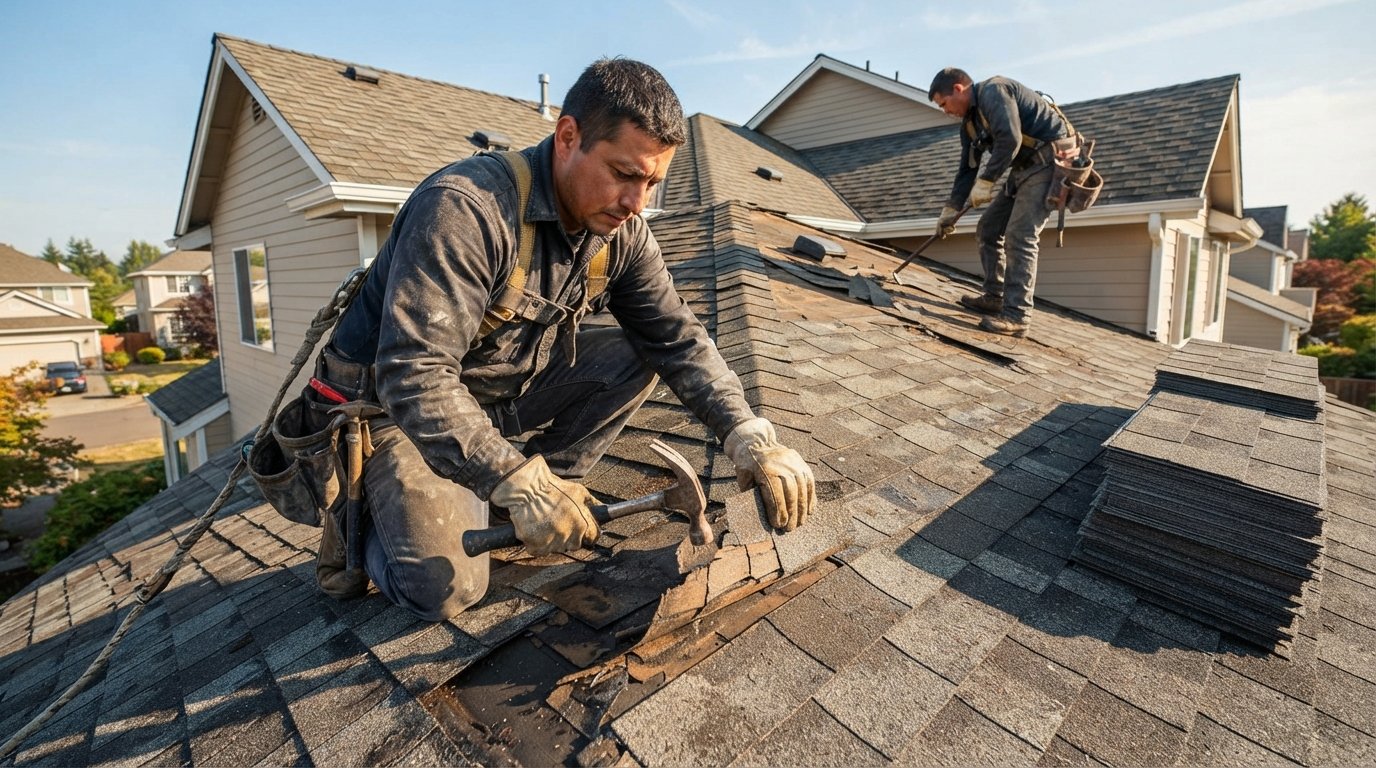
Roof Repair vs Replacement: 7 Key Signs to Decide
Is your roof telling you it needs help? Learn the key signs you need roof repair vs replacement and make a smart choice that saves you money and stress.
By Jackson Sawyer
Learn more about Roof Repair or Maintenance for guides, costs, and what to expect.
Compare Roof Repair or Maintenance Pros Near You

Enter your ZIP code to compare top-rated local professionals and request free quotes.
Your roof is your home's first line of defense against the elements, but it won't last forever. Every year, thousands of homeowners face the same dilemma: should they patch up that leak or bite the bullet and replace the whole thing? The answer isn't always obvious, and making the wrong choice can cost you thousands of dollars. In this guide, we break down the critical signs you need roof repair vs replacement so you can make a confident, informed decision that protects your home and your wallet.
Why the Repair vs. Replacement Decision Matters
The choice between repairing and replacing your roof is not just about fixing a current problem; it's about long-term financial planning and home safety. A timely repair can extend the life of your roof by several years, saving you from a major expense. However, repeatedly patching a roof that's reached the end of its lifespan is like putting a bandage on a broken bone: it's a temporary fix that will eventually fail, leading to more extensive (and expensive) damage to your home's interior, insulation, and structural integrity.
On the other hand, replacing a roof that still has plenty of life left is an unnecessary expenditure that could have been deferred. The key is to evaluate the condition of your roof objectively, considering factors like age, extent of damage, and your long-term plans. This guide will walk you through the most common indicators that signal whether a simple repair will suffice or if a full replacement is the smarter, more cost-effective route.
Age of Your Roof: The Starting Point
The age of your roof is the single most important factor in determining whether you need a repair or a replacement. Most asphalt shingle roofs are designed to last between 20 and 25 years, while other materials like metal, tile, or slate can last 50 years or more. If your roof is approaching or has exceeded its expected lifespan, the chances are high that you'll need a replacement rather than a repair, even if the visible damage seems minor.
Consider this: if your roof is 25 years old and you notice a few missing shingles, a repair might seem like a good idea. But the rest of the roof is likely brittle and deteriorating, and new damage will keep appearing. In this scenario, a replacement is almost always the better investment. Conversely, if your roof is only 5 to 10 years old and has isolated damage from a fallen branch, a repair is the obvious choice. The age of your roof gives you a baseline for making the right call.
Signs You Need Roof Repair vs Replacement: A Detailed Look
While age is a critical factor, the specific signs of damage you observe will also guide your decision. Here are the most common indicators and what they typically mean for your roof's future.
1. Shingle Condition: Curling, Cracking, or Missing
Take a walk around your property and inspect your roof from the ground with a pair of binoculars, or if it's safe, from a ladder. Look for shingles that are curling at the edges, buckling, or showing cracks. These are classic signs of age and weathering. If you see just a few damaged shingles in a localized area, a repair is likely all you need. However, if you notice widespread curling or cracking across the entire roof surface, this indicates that the shingles have lost their protective granules and are nearing the end of their life. In that case, a replacement is the more effective solution.
Missing shingles are another red flag. A single missing shingle after a storm can be replaced quickly. But if you see multiple missing shingles across different areas of the roof, it's a sign that the roof's overall integrity is compromised. The underlying decking is exposed to moisture, which can lead to rot and leaks. When shingle loss is widespread, a full roof replacement is typically the only way to ensure your home is properly protected.
2. Leaks and Water Stains
Water stains on your ceiling or walls are the most obvious sign that your roof has a leak. The source of the leak is not always directly above the stain, as water can travel along rafters and sheathing before dripping down. If you catch a leak early and it's isolated to a small area, such as around a chimney or a vent pipe, a repair is often sufficient to fix the flashing or seal the penetration.
However, if you experience multiple leaks in different areas of your home, or if the leaks are recurring even after repairs, this suggests that the roof's waterproofing membrane has failed. This is a clear sign that you need a replacement. Additionally, if you notice signs of rot or mold in your attic, it indicates that moisture has been seeping in for a while, compromising the structural integrity of your roof. In such cases, a replacement is not just recommended; it's necessary to prevent further damage to your home's frame and insulation.
3. Granule Loss in Gutters
Asphalt shingles are coated with granules that protect them from UV rays and provide fire resistance. Over time, these granules naturally wear off, especially as the roof ages. One way to check for excessive granule loss is to inspect your gutters. If you find a significant amount of granules in the gutters after a rainstorm, it's a sign that your shingles are deteriorating.
A small amount of granules in the gutters is normal, especially on a roof that's over 15 years old. But if you see large piles of granules, or if the shingles themselves look smooth and bare in spots, this is a serious concern. Granule loss accelerates the aging process, making shingles more susceptible to damage from wind and hail. If the loss is widespread, a replacement is the best option. If it's isolated to a few shingles, a repair might work, but you should monitor the situation closely.
4. Sagging Roof Deck
A sagging roof deck is a severe structural issue that demands immediate attention. If you notice a dip or curve in the roofline, either from the ground or from your attic, it means the supports beneath the roof are weakening. This could be due to prolonged water exposure, rot, or even excessive weight from snow or ice. A sagging roof is a safety hazard and requires immediate professional assessment.
In most cases, a sagging roof deck cannot be fixed with a simple repair. The underlying structure needs to be reinforced or rebuilt, which is a major project. This is a clear-cut scenario where a roof replacement is necessary. Ignoring a sagging roof can lead to a catastrophic collapse, putting your family and property at risk. If you notice this sign, contact a professional roofing contractor immediately, and do not delay the replacement.
5. Daylight Through the Roof Boards
If you go into your attic on a sunny day and see rays of light coming through the roof boards, it's a sign that your roof has gaps or holes. This could be due to missing shingles, deteriorated flashing, or even rot in the wooden decking. While a single small gap might be repairable by replacing the damaged shingle or flashing, multiple gaps indicate that the roof's protective layer is failing.
Daylight penetration often goes hand-in-hand with water leaks, as any opening that lets light in can also let water in. If you see this sign, it's essential to have a professional assess the extent of the damage. If the gaps are widespread, a replacement is the more reliable and long-term solution. If they are few and localized, a repair could suffice, but you'll need to ensure the underlying decking is still in good condition.
6. High Energy Bills
Your roof plays a significant role in your home's insulation. A damaged or poorly ventilated roof can allow heat to escape in the winter and enter in the summer, forcing your HVAC system to work harder and increasing your energy bills. If you notice a sudden spike in your heating or cooling costs that isn't explained by a change in your thermostat habits, it could be a sign that your roof is no longer providing adequate insulation.
While this sign alone doesn't always mean you need a replacement, it's a strong indicator that your roof's performance is declining. Older roofs with worn-out insulation or damaged shingles are less effective at regulating temperature. If you're experiencing high energy bills and your roof is also showing other signs of wear, a replacement may be the most cost-effective solution in the long run. A new, energy-efficient roof can significantly reduce your monthly utility costs, offsetting some of the initial investment.
7. Storm Damage: The Immediate Assessment
After a severe storm, it's natural to check your roof for damage. Strong winds can lift and tear shingles, hail can dent and crack them, and falling branches can cause punctures. Some storm damage is repairable, such as replacing a few damaged shingles or fixing a small section of flashing. However, if the storm was particularly severe, or if the damage is extensive, a replacement might be necessary.
Here's a quick guide to help you assess storm damage:
- Repair: A few missing or damaged shingles, small dents from hail, or a single area of damaged flashing.
- Replacement: Widespread shingle loss, large punctures or tears in the roof surface, visible damage to the decking, or a combination of multiple types of damage.
When in doubt, it's always best to have a professional roofer inspect the damage. They can provide an honest assessment of whether a repair will hold up or if a replacement is the only way to ensure your home's safety. Remember, insurance often covers storm damage, so it's important to document everything and file a claim promptly. A professional can also help you navigate the insurance process, ensuring you get the maximum settlement you're entitled to.
Repair vs. Replacement: A Cost-Benefit Analysis
Cost is often the deciding factor for homeowners. Generally, a roof repair is significantly cheaper upfront, costing anywhere from $300 to $1,500 for minor issues. In contrast, a full roof replacement can cost between $5,000 and $15,000 or more, depending on the size of your roof, the materials you choose, and your location. However, it's crucial to look beyond the immediate price tag.
A replacement is a long-term investment that can increase your home's value, improve its energy efficiency, and save you from repeated repair bills. If you plan to stay in your home for several more years, a replacement is often the more economical choice in the long run. On the other hand, if you're planning to sell your home soon, a repair might be enough to get you through the sale, but you'll need to be honest about the roof's condition to avoid any legal issues. For a detailed breakdown of costs and return on investment, you might find our guide on gutter replacement signs helpful, as gutters and roofing often go hand in hand.
When to Call a Professional
Regardless of whether you think you need a repair or a replacement, it's always wise to have a professional roofing contractor inspect your roof. They have the expertise to identify underlying issues that you might miss, and they can provide an unbiased recommendation. A professional can also give you a written estimate for both repairs and a full replacement, allowing you to compare costs and make an informed decision.
When you're ready to take action, USremodel can connect you with qualified, vetted roofing contractors in your area. Our platform allows you to get free, customized quotes from multiple professionals, so you can compare prices and choose the best option for your needs and budget. We simplify the process of finding a reliable contractor, saving you time and giving you peace of mind. Visit our website to get started and see how easy it is to find a roofing expert who can assess your situation and provide a fair quote.
Making the Final Decision
Deciding between a roof repair and a replacement can be stressful, but with the right information, you can make a choice that you're confident about. Start by evaluating the age of your roof, then look for the specific signs of damage we've discussed. If you're dealing with a young roof with minor issues, a repair is likely the way to go. If your roof is older and showing multiple signs of wear, a replacement is probably the more prudent investment.
Remember, a roof is a critical component of your home's structure. It protects you, your family, and your belongings from the weather. It's not the place to take shortcuts. If you're unsure, always err on the side of caution and get a professional opinion. The cost of a professional inspection is small compared to the potential cost of a failure.
Ultimately, the choice comes down to what makes the most sense for your specific situation. By weighing the immediate costs against the long-term benefits, you can determine the best course of action. And when you're ready to move forward, whether it's a simple repair or a full replacement, USremodel is here to help you find the right contractor for the job. Your home deserves the best care, and we're committed to helping you achieve it.