
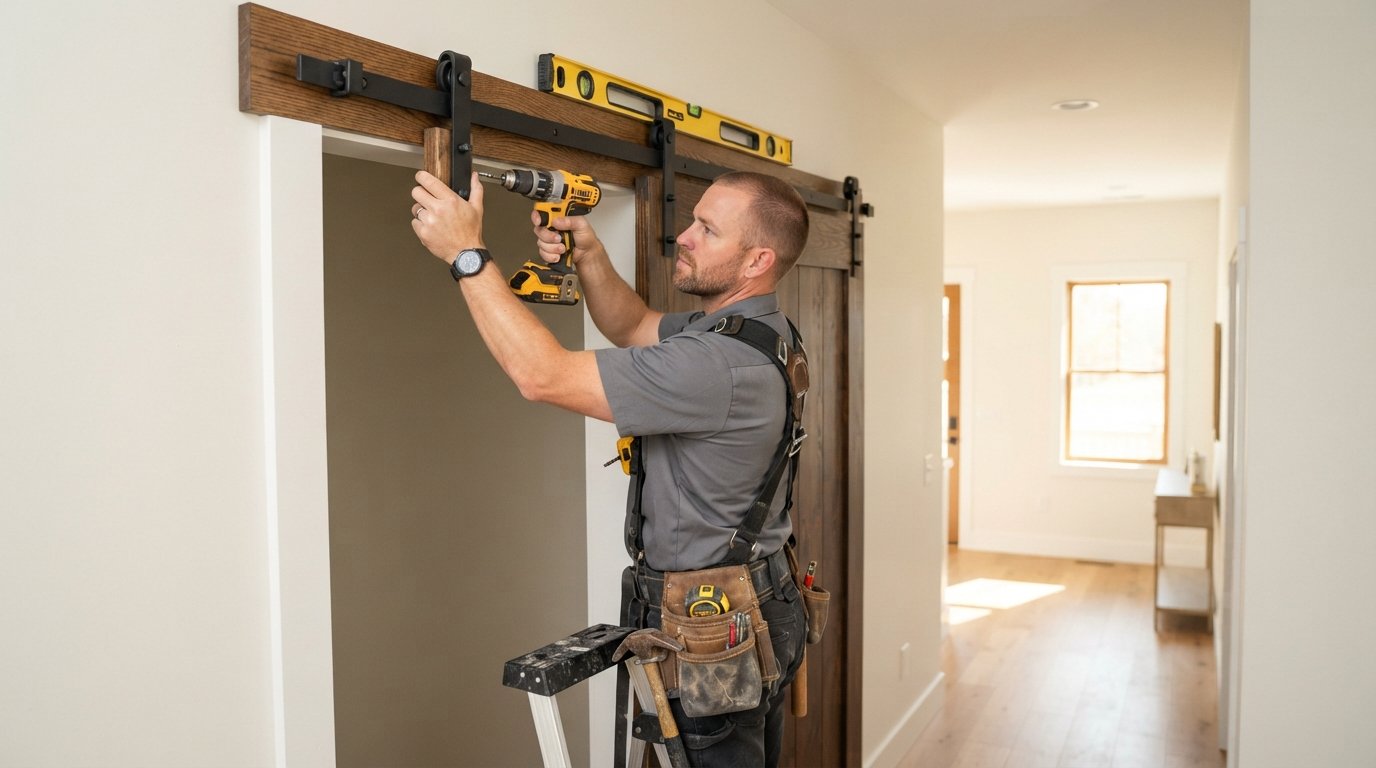
Hire a Sliding Barn Door Installation Professional
Hiring a sliding barn door installation professional ensures a smooth, secure fit, avoids wall damage, and protects your hardware warranty.
By Margaret Sheridan
Learn more about Door Installation for guides, costs, and what to expect.
Compare Door Installation Pros Near You

Enter your ZIP code to compare top-rated local professionals and request free quotes.
You have picked the perfect barn door, the hardware kit is sitting in the hallway, and the opening is measured. Then reality sets in: the header needs reinforcement, the track must be perfectly level, and the floor gap has to clear your flooring without scraping. A sliding barn door looks simple, but a flawless installation requires precise carpentry, structural knowledge, and the right tools. This is why many homeowners choose to hire a sliding barn door installation professional rather than attempt a weekend DIY project that can quickly become a costly mistake.
Beyond the visual appeal, a barn door that hangs wrong can sag, bind, or even pull the top plate off the wall. The weight of a solid wood door can exceed 100 pounds, and the mounting hardware must anchor into studs or a reinforced header. A certified installer understands load distribution, drywall repair, and trim work. They also handle the subtle adjustments that make the door glide smoothly for years. If you are weighing the benefits of this stylish space saver, our guide on sliding barn doors and their true value can help you decide if this design is right for your home.
Why Professional Installation Matters for Barn Doors
Barn doors are not like standard hinged doors. They hang from a single track, and the entire weight is concentrated on the wall above the opening. If that wall only has drywall and a thin header, the track screws will strip and pull out over time. A professional evaluates the framing before drilling a single hole. They can identify whether the header is solid or if it needs a blocking kit, a steel reinforced plate, or additional studs.
Installing a sliding barn door also requires managing the floor gap. The door needs enough clearance to swing over carpet, tile, or hardwood without dragging, but not so much that you see daylight underneath. Adjusting the floor guides, setting the anti-jump brackets, and aligning the door stops are all fine-tuning tasks that separate a polished installation from a frustrating one. A sliding barn door installation professional brings levels, laser guides, and experience to ensure the door is plumb and the track is perfectly horizontal.
Another common issue is the wall space beside the opening. A barn door must have a clear, flat wall area equal to the door width to slide into. If you have baseboards or light switches in that path, the door will not sit flush. A professional can advise on trim removal, outlet relocation, or the use of a bypass or double door configuration. They also prevent damage to your flooring and wall finish, which is especially important if you plan to sell the home later.
Key Factors to Consider Before Booking an Installer
Before you request a quote, take a few measurements and think about the door itself. The weight, width, and material of the door directly affect the hardware and mounting requirements. A hollow core door is much lighter than a solid alder or reclaimed wood door. The track length must be at least double the door width, plus a few extra inches for the door to clear the opening completely. If your hallway is tight, a professional might suggest a sliding door that tucks into a pocket or a track with a soft-close mechanism.
You should also consider the condition of your wall. Plaster walls, tile backsplashes, and walls with metal studs require different anchors and installation techniques. A professional will inspect for potential hazards like electrical wires or plumbing pipes behind the drywall. They will also check the floor level, because even a slight slope can cause the door to drift toward one side. Here are a few concrete factors to review during your initial consultation:
- Wall structure: drywall over wood studs, metal studs, or masonry block each need specific mounting methods.
- Door weight and size: heavier doors need higher-grade tracks and additional wall reinforcement.
- Flooring type and height: carpet, tile, and hardwood change the required under-door clearance.
- Adjacent obstacles: baseboards, light switches, outlets, and vents can block the door path.
- Ceiling height and trim: tall doors or crown molding may limit the track mounting position.
After you evaluate these points, you will have a clearer scope for the installer. Some companies charge a flat fee for standard installations, while others quote by the hour plus materials. A professional will provide a written estimate that includes the track, fasteners, and any optional upgrades like soft-close or anti-jump mechanisms. This prevents surprise bills and ensures you are comparing apples to apples when you get multiple quotes.
What to Expect From a Professional Barn Door Installation
When you hire a sliding barn door installation professional, the process usually follows a structured sequence. First, the installer arrives with all the necessary tools and safety equipment. They protect your floors with drop cloths and lay out the hardware to verify that nothing is missing. Then they locate the studs and mark the exact center of the opening on the wall. This is where precision matters: if the track is off by even a quarter inch, the door will not close evenly.
Next, the installer either reinforces the wall or directly mounts the track. For solid wood doors, they may install a steel header plate that spans multiple studs. They use a level to ensure the track is perfectly horizontal, because a tilted track will cause the door to slide on its own. Once the track is secure, they hang the door, adjust the floor guides, and install the anti-jump discs. Finally, they test the door multiple times, adjusting the stops and tension so that it opens and closes with a gentle push.
Another advantage of hiring a professional is the clean finish. They know how to cut the track to the correct length, drill pilot holes to prevent wood splitting, and install the trim or cover plates neatly. They also handle the removal and disposal of your old door if needed. This level of detail is difficult to achieve with a DIY kit, especially if you are not experienced with power tools or carpentry. A professional can also offer advice on maintenance, such as lubricating the rollers and checking the screws after the first few weeks.
Cost Breakdown and Return on Investment
The cost of professional installation varies based on your location, the complexity of the project, and the type of door and hardware. On average, homeowners pay between $250 and $600 for labor, with the door and hardware adding another $200 to $1,000 or more. For a high-end solid wood door with custom track, the total project can exceed $1,500. However, a poorly installed door can cause damage to your wall, flooring, or the door itself, leading to repair costs that far exceed the installation fee.
Investing in professional installation also protects your warranty. Most quality hardware manufacturers require installation according to their specifications, and some warranties are void if the door is not hung correctly. A professional will ensure that the mounting bolts are torqued to the right specification and that the door clears the floor by the recommended distance. This peace of mind is especially valuable if you are installing a door in a high-traffic area like a bathroom or pantry.
From a return on investment perspective, a well-installed barn door can add a stylish focal point to your home. If you are planning to sell, a smooth operating door is a strong selling feature. Real estate agents often note that buyers appreciate the space-saving design and the modern farmhouse aesthetic. If you ever decide to remove the door, a professional installation also leaves less damage behind, which makes the resale process smoother.
How to Find the Right Professional for Your Project
Finding a qualified sliding barn door installation professional is not as simple as searching for a general handyman. You want someone who has specific experience with barn door hardware and wall reinforcement. Start by asking for recommendations from friends or your local hardware store. Online review platforms can also provide insight into a contractor's reliability, punctuality, and attention to detail.
When you interview potential installers, ask about their experience with doors of similar weight and size. Request to see photos of their previous work, especially projects that involved drywall repair or tricky wall conditions. A trustworthy professional will be happy to provide references and proof of insurance. They should also be able to explain their process for handling unexpected issues, such as finding a hidden stud or a non-standard wall thickness.
One effective way to simplify your search is to use a home improvement lead generation platform that connects you with vetted local contractors. For example, 180Remodel connects homeowners with professional contractors for a wide range of remodeling projects, including custom door installations. These platforms typically offer free quotes from multiple providers, allowing you to compare prices and credentials without having to call dozens of companies. This approach saves time and reduces the risk of hiring someone who lacks the necessary skills.
Another consideration is the scope of your overall project. If you are planning a larger renovation, such as a bathroom or kitchen remodel, it may be efficient to hire a general contractor who can coordinate the barn door installation alongside other trades. A general contractor can also manage the drywall, painting, and flooring work that might be needed around the door opening. This ensures a seamless finish and avoids scheduling conflicts.
Common Mistakes to Avoid During Installation
Even if you decide to hire a professional, it helps to know the pitfalls that can compromise your project. One of the most frequent mistakes is underestimating the wall strength. A standard drywall anchor is not sufficient for a heavy door. Without proper reinforcement, the track will eventually pull away, damaging the drywall and potentially causing injury. A professional will always anchor into the studs or use a structural header plate.
Another error is choosing the wrong track length. If the track is too short, the door will not clear the opening completely, leaving a gap that reduces privacy and light blocking. If the track is too long, it may extend into areas where you cannot mount it securely. A professional measure the space accurately and order the correct track length from the start. They also consider the door swing direction and the placement of door stops.
Floor guides are another common source of frustration. These small brackets keep the door from swinging outward, but they must be positioned correctly. If they are too tight, they rub against the door and cause scratches. If they are too loose, the door will sway. A professional installs floor guides that allow a slight clearance, usually about 1/8 inch, while still keeping the door stable. They also adjust the nylon pads or rubber bumpers to prevent metal-on-metal contact.
Finally, many DIY installers forget to consider the baseboard and casing. A barn door cannot slide past a thick baseboard or a protruding door casing. The door will either hit the trim or leave a large gap that looks unprofessional. A professional can remove the baseboard in the door path, install a flush floor guide, or use a track that offsets the door slightly. This attention to detail is what makes the final result look like it was custom designed for your home.
Preparing Your Home for the Installer
To ensure a smooth installation day, you can take a few simple steps before the professional arrives. Clear the area around the door opening, including any furniture, rugs, or decor that might obstruct the work zone. If you are replacing an existing door, remove any curtains or blinds from nearby windows. Also, ensure that the installer has clear access to the electrical panel in case they need to temporarily shut off power for outlet relocation.
Communicate your preferences clearly. If you want the door to slide to the left or right, specify this during the quote process. If you have children or pets, mention that you would like a soft-close mechanism or a door stop to prevent slamming. If you have a specific aesthetic in mind, such as a matte black track or a reclaimed wood door, share those details so the installer can recommend compatible hardware. The more information you provide, the more accurate the quote and the final result.
Finally, set a realistic timeline. A standard barn door installation usually takes one to two hours if the wall is straightforward. However, if your project involves drywall repair, header reinforcement, or custom trim, it may take half a day or longer. Your installer will provide an estimated completion time, but allow for some flexibility. Rushing the job can lead to mistakes, so it is better to let the professional work at a careful pace.
Long-Term Care and Maintenance
Once your barn door is installed, a little maintenance will keep it operating smoothly for years. The track and rollers should be cleaned periodically to remove dust and debris. Use a soft cloth and a mild cleaner, then apply a dry lubricant to the rollers and the track. Avoid oil-based lubricants, as they can attract dust and become sticky over time. Check the mounting screws every six months and tighten any that feel loose.
Inspect the floor guide pads for wear and replace them if they become cracked or flattened. If your door starts to make a grinding noise, it may indicate that the roller bearings are failing or that the track has become misaligned. A professional can make these adjustments quickly, but it is wise to address them before they cause damage to the door or track. With proper care, a high-quality barn door installation can last for decades.
If you are planning other home improvements, consider how your barn door integrates with the rest of the space. For example, a barn door in a bathroom should have adequate ventilation and privacy. A door that leads to a closet may need a different type of latch or a magnetic catch. Your installer can advise on these additional details, ensuring that the door is both functional and beautiful.
In summary, the decision to hire a sliding barn door installation professional is a smart investment in your home's functionality and style. Professionals bring the tools, experience, and problem-solving skills needed to handle complex wall conditions, heavy doors, and finish details that are easy to overlook. By choosing a qualified installer and preparing your space in advance, you can enjoy a beautiful, smooth-sliding door that adds value to your home for years to come.
Learn more about Door Installation for guides, costs, and what to expect.
Compare Door Installation Pros Near You
Enter your ZIP code to compare top-rated local professionals and request free quotes.