
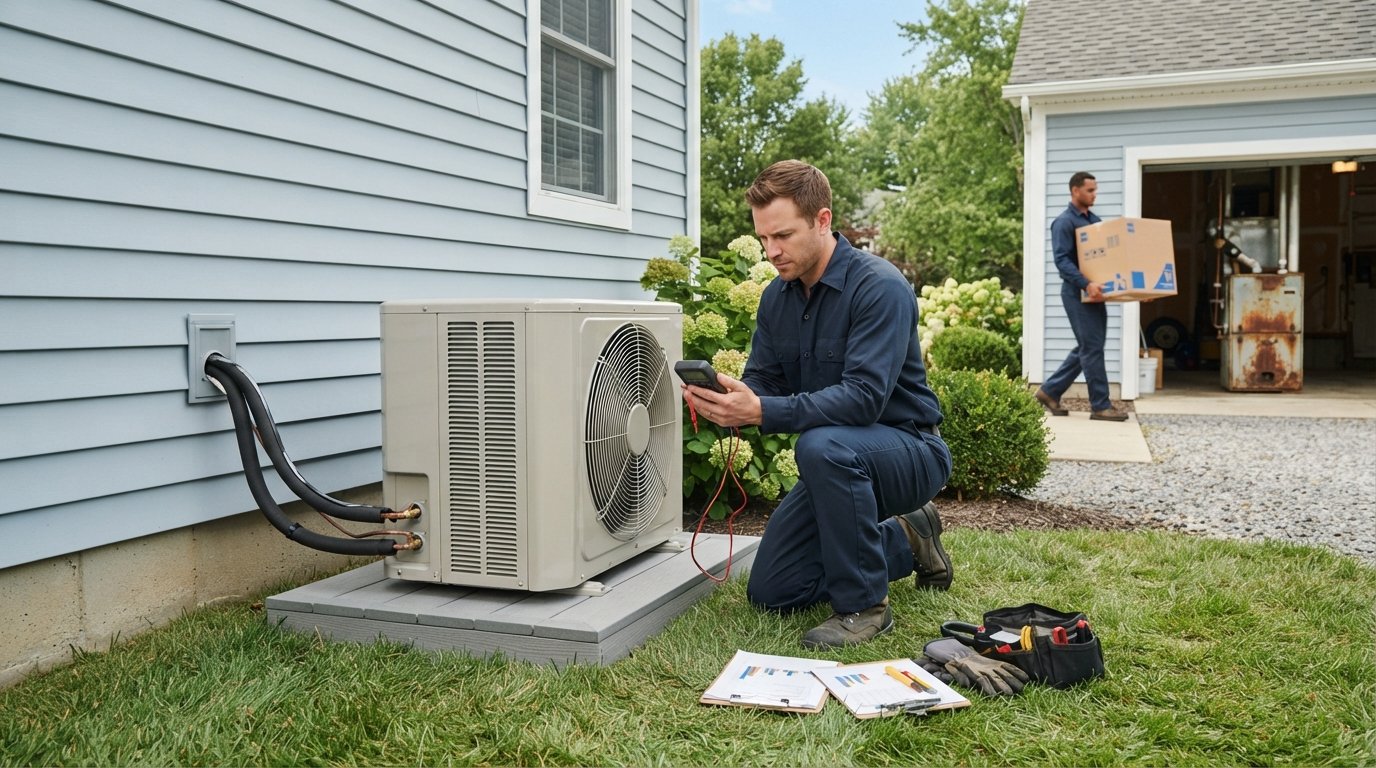
Energy Efficient HVAC Upgrades: Tax Credits for 2026
Federal tax credits for 2026 can offset up to 30% of your energy efficient HVAC upgrade costs, reducing your tax bill while lowering energy use.
By Margaret Sheridan
Learn more about Heating System Installation or Replacement for guides, costs, and what to expect.
Compare Heating System Installation or Replacement Pros Near You

Enter your ZIP code to compare top-rated local professionals and request free quotes.
Your aging heating and cooling system is quietly draining your wallet every month. Between rising utility rates and a system that struggles to keep up with extreme temperatures, many homeowners are facing a difficult choice: repair an inefficient unit again or invest in a modern, high-efficiency replacement. The good news is that 2026 brings renewed opportunities to offset the cost of that upgrade through federal tax credits and incentives that reward energy-conscious decisions. Understanding how these programs work can mean the difference between paying full price and saving thousands on a system that pays you back for years.
Why HVAC Efficiency Matters More Than Ever in 2026
The push toward energy efficiency has never been stronger. Federal regulations continue to tighten minimum efficiency standards for residential HVAC equipment, and homeowners are increasingly aware that their heating and cooling systems account for nearly half of their home energy consumption. An outdated system with a low Seasonal Energy Efficiency Ratio (SEER) rating can waste hundreds of dollars annually compared to a modern, high-efficiency unit.
Beyond the monthly savings, there is a growing recognition that energy-efficient upgrades contribute to broader environmental goals. Reducing energy demand lowers greenhouse gas emissions associated with power generation. For homeowners, this means that upgrading to an Energy Star certified system is not just a financial decision but also a contribution to sustainability. The federal government recognizes this dual benefit and has structured tax credits to encourage widespread adoption of efficient technologies.
In 2026, the landscape of incentives has evolved. While some programs from prior years have been modified or extended, the core message remains: homeowners who invest in qualified energy-efficient HVAC equipment can claim significant tax credits that reduce their overall tax liability. These credits are available for a range of equipment, from high-efficiency furnaces and air conditioners to heat pumps and geothermal systems.
Understanding the Federal Tax Credits for HVAC Upgrades
The federal tax credits for energy-efficient home improvements, including HVAC upgrades, are part of a broader effort to incentivize residential energy efficiency. These credits are non-refundable, meaning they reduce the amount of tax you owe, but they can be carried forward if your tax liability is lower than the credit amount. The credits apply to equipment placed in service during the tax year, and homeowners must meet specific efficiency requirements to qualify.
For 2026, the credits cover a percentage of the cost of qualified equipment, including installation labor. The exact percentage and maximum credit amounts depend on the type of equipment and when it was installed. Generally, the credit is worth up to 30% of the project cost, with annual caps that vary by category. High-efficiency heat pumps, for example, often qualify for the full 30% credit up to $2,000, while furnaces and air conditioners may have lower caps.
It is important to note that these credits are separate from any state or local rebates that may be available. Many utility companies also offer rebates for energy-efficient upgrades, and combining federal credits with these local incentives can dramatically reduce the net cost of your project. To maximize your savings, you should research all available programs before making a purchase.
Qualifying Equipment and Efficiency Standards
Not all HVAC equipment qualifies for the tax credit. The government sets specific efficiency thresholds that equipment must meet or exceed. For instance, split-system air conditioners must have a SEER2 rating of at least 16, while heat pumps must meet a minimum Heating Seasonal Performance Factor (HSPF2) and SEER2 rating. Furnaces must have an Annual Fuel Utilization Efficiency (AFUE) rating of 95% or higher. Geothermal heat pumps have their own set of standards.
When shopping for a new system, look for the Energy Star label, which indicates that the equipment meets or exceeds federal efficiency guidelines. However, be aware that Energy Star certification alone does not guarantee tax credit eligibility; you must verify that the specific model meets the credit requirements. Manufacturers and contractors can provide the necessary documentation, including the Manufacturer Certification Statement, which you will need to keep for your records.
It is also crucial to ensure that the installation is performed by a qualified contractor. Improper installation can void the tax credit and reduce the system's efficiency. A licensed HVAC professional will ensure that the equipment is sized correctly, the ductwork is sealed, and the system is charged and calibrated for optimal performance. If you are unsure about finding a reliable contractor, platforms like 180Remodel connect homeowners with vetted professionals for a range of home improvement projects, including HVAC installations.
How to Claim Your HVAC Tax Credit
Claiming your tax credit is a straightforward process, but it requires careful documentation. You will need to file IRS Form 5695, Residential Energy Credits, with your federal tax return. This form calculates your credit based on the qualified expenses you incurred during the year. You must retain receipts, invoices, and the Manufacturer Certification Statement for each qualifying product.
Here is a step-by-step overview of the process:
- Purchase and install qualified equipment. Ensure the equipment meets the efficiency standards for the tax year in which it is placed in service.
- Gather documentation. Collect receipts, invoices, and the Manufacturer Certification Statement from your contractor or manufacturer.
- Complete IRS Form 5695. Calculate your credit using the form's instructions. The credit is subject to the caps for each category.
- Claim the credit on your tax return. Enter the credit amount on the appropriate line of your Form 1040.
- Keep records. Store all documentation for at least three years in case of an audit.
If you work with a tax professional, they can help ensure that you claim the correct amount and that all requirements are met. DIY tax software often includes the necessary forms, but you must input the data accurately. Remember that the credit is non-refundable, so it can only reduce your tax liability to zero; any excess credit may be carried forward to future years, depending on the specific rules for that credit.
For homeowners planning a larger renovation that includes HVAC upgrades, it is wise to coordinate with other energy-efficient improvements. For example, upgrading your windows can reduce the load on your HVAC system and may qualify for separate tax credits. Our guide on 2026 energy efficient window tax credits explains how to combine these incentives for maximum savings.
Maximizing Your Savings with Additional Incentives
Federal tax credits are just one piece of the puzzle. Many states offer their own incentives for energy-efficient upgrades, ranging from rebates to property tax exemptions. Utility companies frequently provide rebates for installing high-efficiency equipment, and some even offer low-interest financing for energy improvements. These programs can vary significantly by location, so it is worth researching what is available in your area.
Another strategy is to bundle your HVAC upgrade with other energy-efficient projects. For instance, adding insulation, sealing ductwork, or installing a smart thermostat can improve your system's efficiency and may qualify for additional credits. The cumulative effect of these upgrades can lead to substantial energy savings and a more comfortable home. Some homeowners also consider solar panel installation to offset the electricity used by their new HVAC system, creating a truly sustainable home energy ecosystem.
When planning your upgrade, consider the long-term return on investment. While high-efficiency equipment may have a higher upfront cost, the combination of tax credits, rebates, and reduced energy bills often results in a payback period of just a few years. Moreover, energy-efficient homes tend to have higher resale values and attract buyers who are conscious of utility costs. Investing in efficiency is an investment in your home's future.
Common Mistakes to Avoid
Even with the best intentions, homeowners sometimes miss out on tax credits due to avoidable errors. One common mistake is purchasing equipment that does not meet the specific efficiency requirements for the tax year. Efficiency standards can change, so always verify the requirements for the year in which the equipment is installed. Another mistake is failing to keep the Manufacturer Certification Statement, which is required documentation for the credit.
Hiring an unqualified contractor can also jeopardize your credit. If the installation does not meet industry standards or if the contractor cannot provide the necessary documentation, your credit may be disallowed. Always work with licensed and insured professionals who are familiar with energy-efficient installations and tax credit requirements. Additionally, some homeowners forget to claim the credit on their tax return, assuming it is automatic. You must proactively claim the credit using Form 5695.
Finally, be wary of scams or misleading claims about "free" HVAC systems or guaranteed credits. The federal tax credit is a legitimate program, but it requires you to pay for the equipment and installation upfront and then claim the credit on your taxes. There is no upfront discount from the government. If an offer sounds too good to be true, it probably is.
Planning Your HVAC Upgrade for 2026
As you plan your HVAC upgrade, start by assessing your current system's age, efficiency, and performance. If your system is more than 10-15 years old, it is likely a good candidate for replacement. Consider your home's size, layout, and insulation levels to determine the right size and type of system. A qualified contractor can perform a load calculation to ensure proper sizing.
Next, research the available tax credits and incentives. The IRS website and Energy Star website provide detailed information on qualifying equipment and credit amounts. Your contractor can also provide guidance on which models qualify. Once you have selected your equipment, obtain multiple quotes from licensed contractors to compare prices and services. This is where a platform like USremodel can be invaluable, as it connects you with multiple contractors who can provide customized quotes for your project.
After installation, keep all receipts and documentation in a safe place. When tax season arrives, complete Form 5695 and claim your credit. If you have any questions, consult a tax professional. By taking these steps, you can enjoy a more comfortable, efficient home while reducing your tax burden.
The transition to energy-efficient HVAC equipment is a smart financial move that benefits both your household and the environment. With federal tax credits for 2026, the upfront cost of upgrading is more manageable than ever. By understanding the requirements, documenting your project, and claiming your credit, you can maximize your savings and enjoy the long-term rewards of a high-performance heating and cooling system.
Learn more about Heating System Installation or Replacement for guides, costs, and what to expect.
Compare Heating System Installation or Replacement Pros Near You
Enter your ZIP code to compare top-rated local professionals and request free quotes.