
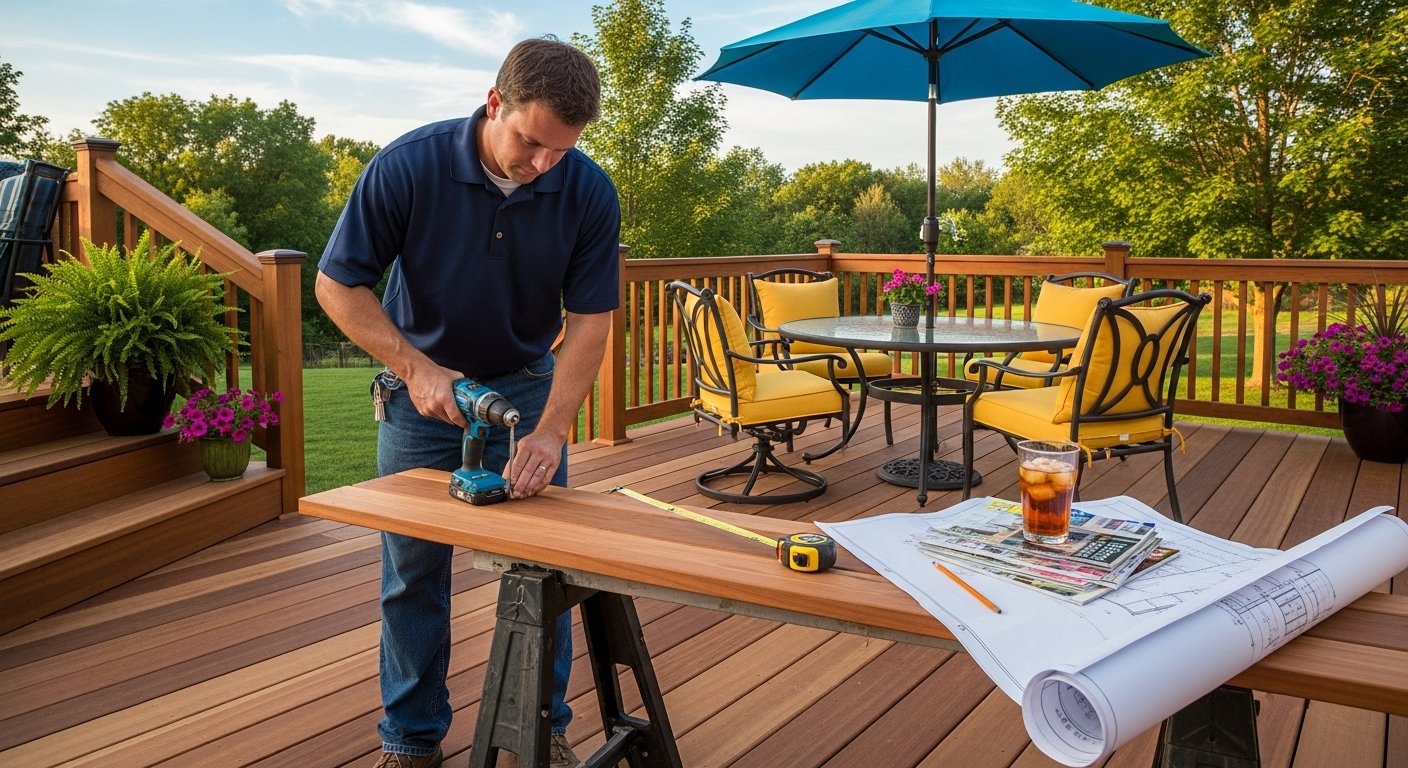
Deck Installation Guide: Build Your Dream Outdoor Space
A well-built deck boosts home value and creates the perfect outdoor space. Learn the essential steps for a successful deck installation in this comprehensive guide.
By Jessica Reis
Learn more about Deck or Porch Remodel or Addition for guides, costs, and what to expect.
Compare Deck or Porch Remodel or Addition Pros Near You

Enter your ZIP code to compare top-rated local professionals and request free quotes.
Adding a deck is one of the most rewarding home improvement projects you can undertake. It extends your living space, creates a perfect spot for entertaining, and can significantly boost your home's value. However, the process involves many decisions: choosing materials, understanding building codes, and finding the right contractor. This guide walks you through every stage of deck installation, from planning to the final walkthrough, so you can approach your project with confidence.
Whether you are dreaming of a small platform for a grill or a multi-level oasis with built-in seating, the success of your project hinges on preparation. A well-planned deck not only looks beautiful but also stands up to weather and heavy use for decades. In this article, we will cover the essential steps, cost factors, and common pitfalls to avoid, ensuring you are fully informed before you break ground.
Why a New Deck Is a Smart Investment
Before diving into the logistics, it is worth understanding why a deck is such a popular home improvement. According to the National Association of Realtors, a wood deck can recoup about 65% to 70% of its installation cost when you sell your home. This makes it one of the highest-returning exterior projects. Beyond the financial aspect, a deck provides a dedicated space for relaxation and social gatherings, which many homeowners find invaluable.
Beyond resale value, a deck improves the overall functionality of your property. It creates a natural transition from indoor to outdoor living, which is particularly appealing in mild climates. You can use it for morning coffee, weekend barbecues, or simply as a quiet retreat. The sense of expanded living space is immediate and tangible, making it a project that delivers daily satisfaction.
Planning Your Deck Installation: Key Steps
Proper planning is the foundation of a successful deck installation. Skipping this phase often leads to budget overruns, delays, and even safety issues. Here are the critical steps to take in the planning phase:
- Define the purpose and size: Will it be for dining, lounging, or both? How many people do you need to accommodate? This determines the footprint and layout.
- Choose a location: Consider sun exposure, privacy, views, and access from your home. Check for underground utilities and easements.
- Set a realistic budget: Include materials, labor, permits, and a contingency of 10-15% for unexpected issues.
- Research local building codes: Your municipality will have specific requirements for footings, structural loads, and railing heights.
- Decide on materials: Options include pressure-treated wood, cedar, composite, PVC, and aluminum. Each has different costs, maintenance, and lifespan.
Once you have a clear vision, it is highly recommended to get a professional assessment. A licensed contractor can spot potential issues, such as poor drainage or soil conditions, that you might miss. They can also help you refine your design to maximize your space and budget. Getting multiple quotes is the best way to ensure you are getting a fair price and a contractor who understands your project.
Understanding Building Permits and Codes
Most jurisdictions require a permit for deck construction, especially if it is attached to your house. The permit process involves submitting your plans for review to ensure they meet local building codes. These codes govern everything from the depth of footings to the spacing of balusters. While it might seem like a hassle, a permit protects you from future liability and ensures your deck is safe.
If you hire a professional contractor, they will typically handle the permit process as part of their service. However, you should always confirm this in writing. If you are planning to build the deck yourself, you are responsible for obtaining the permit and scheduling the necessary inspections. Skipping this step can lead to fines and even force you to tear down the structure if it does not meet code.
Choosing the Right Deck Materials
The material you choose for your deck will affect its appearance, durability, maintenance, and upfront cost. Here is a breakdown of the most common options to help you make an informed decision:
- Pressure-treated wood: This is the most economical choice. It is durable and naturally resistant to rot and insects, but it requires regular staining or sealing to maintain its look.
- Cedar or redwood: These are naturally beautiful and resistant to insects. They cost more than pressure-treated wood and need similar maintenance, but they age gracefully to a silver-gray patina.
- Composite decking: Made from wood fibers and recycled plastic, composite is low-maintenance and resistant to fading, staining, and mold. It has a higher upfront cost but saves money on long-term upkeep.
- PVC or vinyl decking: This is a purely synthetic option that is entirely waterproof and very durable. It is also low-maintenance but can get hot in direct sunlight and is the most expensive.
- Aluminum decking: This is a premium choice for its extreme durability and fire resistance. It is lightweight, low-maintenance, and can be painted, but it is also the priciest option.
Each material has its own set of trade-offs. For example, composite decking is an excellent choice for homeowners who want a beautiful deck without the hassle of yearly sealing. On the other hand, if you have a tight budget and are willing to invest time in maintenance, pressure-treated wood can be a great value. Your contractor can provide a detailed cost comparison based on the size of your deck and your local material prices.
The Deck Installation Process: What to Expect
Once you have your plans and materials, the actual installation can begin. While the details vary by project, a typical deck installation follows these stages:
- Site preparation: The area is cleared of grass, debris, and any existing structures. The ground is leveled to ensure a stable base.
- Digging footings: Holes are dug below the frost line (or per local code) to support the deck's weight. Concrete is poured into these holes, and metal brackets or posts are set.
- Installing the ledger board: This is a critical step where a horizontal board is attached to the house. It must be flashed properly to prevent water intrusion into your home.
- Building the frame: Beams are attached to the posts, and joists are laid across the beams. The frame must be perfectly square and level.
- Laying the decking: The decking boards are screwed or clipped to the joists, with small gaps between boards for drainage and airflow.
- Adding railings and stairs: Railings are installed for safety, and stairs are built if the deck is elevated. This is a significant portion of the labor and material cost.
- Final finish: For wood, this involves staining or sealing. For composite or PVC, it simply means cleaning up and removing any protective film.
Throughout this process, a professional contractor will be coordinating inspections at key points, such as after the footings are poured and after the frame is built. This ensures the structural integrity of your deck. The entire project can take anywhere from a few days for a simple deck to several weeks for a complex design, depending on weather and crew size.
Cost Factors for Deck Installation
The national average cost to build a deck is between $7,500 and $12,000, but this figure can vary widely. Your final price depends on several key factors:
- Size and height: Larger decks require more materials and labor. A second-story deck needs taller footings and more substantial framing.
- Material choice: As mentioned, pressure-treated wood is the cheapest, while composite and PVC are more expensive. Decking material alone can account for 30-40% of your total budget.
- Labor costs: Labor rates vary by region, but you can expect to pay between $30 and $60 per hour for a professional crew. Complex designs with angles or multiple levels increase labor time.
- Permits and inspections: Permit fees typically range from $100 to $500, depending on your local government.
- Demolition and removal: If you are replacing an old deck, you will need to pay for its removal and disposal, which adds to the total cost.
- Extra features: Built-in seating, planters, lighting, and custom railings will all add to your total investment.
Because deck installation costs can be unpredictable, it is wise to get quotes from multiple contractors. USremodel simplifies this process by connecting you with several pre-screened professionals in your area. You can receive customized, affordable quotes from contractors who understand local building codes and have experience with decks similar to yours. This allows you to compare prices and services without the hassle of calling around.
DIY vs. Professional Deck Installation
There is a strong temptation to save money by building your own deck. DIY deck installation is possible, especially for a simple ground-level deck. However, it is a physically demanding project that requires a solid understanding of structural engineering, local codes, and construction techniques. A mistake in the foundation or framing can lead to a dangerous collapse, putting your family and property at risk.
Hiring a professional contractor offers several advantages. First, they have the expertise to handle complex issues like uneven terrain or poor soil. Second, they carry insurance, which protects you if something goes wrong. Third, they often offer warranties on their workmanship, giving you peace of mind. Finally, a professional can complete the job faster and more efficiently than a homeowner, minimizing disruption to your daily life.
If you decide to take the DIY route, be honest about your skill level. You will need to rent tools like a post-hole digger and a power drill, and you must be comfortable with precise measuring and leveling. Even then, it is a good idea to have a professional review your plans before you start. For most homeowners, the benefits of hiring a professional far outweigh the cost savings of a DIY project.
Maintenance Tips for Your New Deck
Once your deck is installed, proper maintenance will keep it looking great and extend its lifespan. The specific maintenance routine depends on the material you chose. For wood decks, this means cleaning and resealing every 1-3 years, depending on your climate. Composite and PVC decks require far less upkeep, but they still need periodic cleaning to prevent mold and mildew.
Here are a few universal maintenance tips:
- Clean regularly: Sweep off debris and wash the surface with a mild detergent and water. Use a soft-bristle brush to avoid scratching the finish.
- Inspect annually: Check for loose boards, popped nails, or damaged railings. Early detection can prevent small issues from becoming big repairs.
- Protect from furniture: Use furniture pads or glides to avoid scratching the deck surface. Consider placing rugs in high-traffic areas.
- Trim nearby vegetation: Keep plants and shrubs away from the deck to reduce moisture buildup and prevent insect damage.
For wood decks, pay attention to the condition of the stain or sealant. If water no longer beads up on the surface, it is time to reapply. For composite decks, avoid using harsh chemicals or metal tools that can leave permanent streaks. With the right care, your deck will remain a beautiful and functional part of your home for many years.
Getting Started with Your Deck Project
Now that you understand the scope of a deck installation project, you are ready to take the next step. Start by defining your needs and setting a budget. Then, use an online resource like USremodel to connect with local contractors who specialize in deck building. You can request free quotes from multiple professionals, allowing you to compare pricing and approaches before committing. This not only helps you get the best value but also gives you a sense of each contractor's communication style and expertise.
Remember, a deck is a long-term investment. Taking the time to plan carefully and hire the right team will ensure you enjoy your outdoor space for decades. Do not hesitate to ask contractors for references and examples of their previous deck work. A reputable professional will be happy to share their portfolio and walk you through their process. With the right preparation, your new deck will become a favorite gathering place for your family and friends.
Your deck installation journey is a significant undertaking, but with the right guidance and professional help, it can be a smooth and rewarding experience. By focusing on careful planning, quality materials, and skilled workmanship, you can create an outdoor living area that adds real value to your home and enhances your quality of life.
Learn more about Deck or Porch Remodel or Addition for guides, costs, and what to expect.
Compare Deck or Porch Remodel or Addition Pros Near You
Enter your ZIP code to compare top-rated local professionals and request free quotes.