
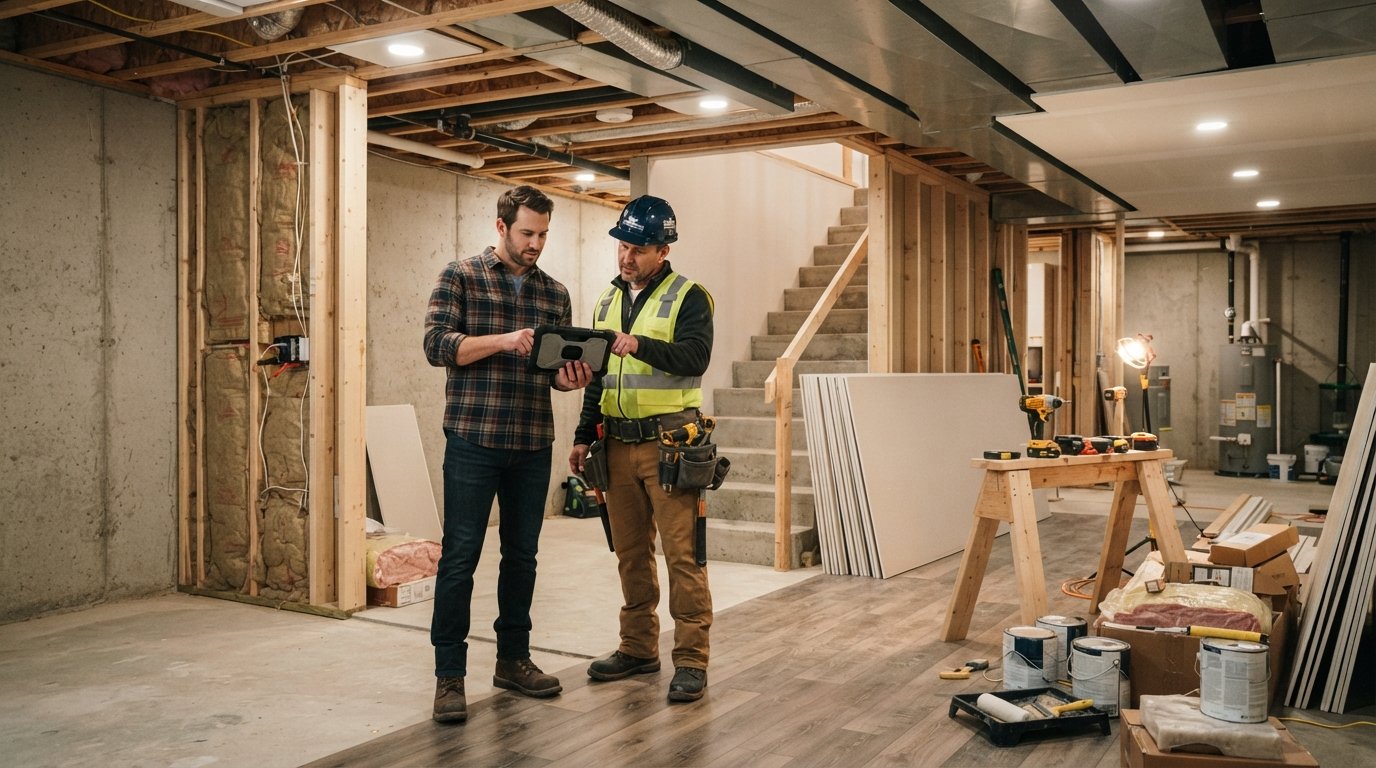
Basement Finishing Cost in 2026: Budget and Save
Understand the true cost to finish basement in 2026, from per-square-foot pricing to hidden fees, and learn how to budget smartly.
By Jackson Sawyer
Learn more about Basement Finishing or Remodeling for guides, costs, and what to expect.
Compare Basement Finishing or Remodeling Pros Near You

Enter your ZIP code to compare top-rated local professionals and request free quotes.
You have probably imagined the perfect home theater, a cozy guest suite, or a playroom that keeps the toys out of the living room. That unused space below your feet holds immense potential, but the first question is always about money. The cost to finish basement in 2026 varies wildly based on size, location, and your finish choices, yet the average homeowner spends between $30,000 and $75,000 for a complete project. Before you dismiss that figure as too high or assume it is too low, you need to understand exactly what drives the price and where you can save without cutting corners on quality. This guide breaks down the real numbers, the hidden expenses, and the smart planning steps that keep your budget on track.
Why Basement Finishing Costs Keep Rising
The national average for finishing a basement climbed steadily over the last few years, and 2026 is no exception. Material prices for lumber, drywall, and flooring have stabilized somewhat, but labor costs continue to increase due to a skilled trades shortage. You are not just paying for materials and workers; you are paying for the complexity of transforming a dark, damp, unfinished space into a livable room that meets modern building codes.
One of the biggest cost drivers is the mechanical work. Basements sit below grade, which means moisture control, insulation, and sometimes sump pump installation are non-negotiable. A simple drywall-and-paint job over concrete walls will fail within a few years. Professional contractors understand this, and their quotes reflect the necessary steps to ensure durability. If you receive a suspiciously low bid, ask detailed questions about waterproofing, vapor barriers, and insulation R-values.
Another factor is the rise in demand for finished basements as a primary living area. With remote work still common, many homeowners are adding offices and gyms to their lower levels. This pushes up the average cost because these spaces require additional electrical outlets, dedicated lighting circuits, and sometimes soundproofing. The more specialized the room, the higher the price per square foot.
Breaking Down the Cost per Square Foot
When you receive quotes from contractors, they will likely give you a cost per square foot. In 2026, the range is typically $40 to $100 per square foot, but the final number depends on the condition of your basement and the quality of finishes you select. A basic, builder-grade finish with laminate flooring and standard paint will land at the lower end, while custom millwork, high-end flooring, and a wet bar can push you to the upper limit.
To give you a clearer picture, here is a rough breakdown of what you might expect for a 1,000-square-foot basement:
- Framing and insulation: $4,000 to $8,000
- Electrical (outlets, lighting, panels): $3,000 to $6,000
- Plumbing (if adding a bathroom or bar): $5,000 to $15,000
- Drywall and painting: $4,000 to $8,000
- Flooring (carpet, vinyl, or tile): $3,000 to $10,000
- Ceiling (drop or drywall): $2,000 to $5,000
These are only material and labor estimates for the basic structural work. You also need to budget for permits, which can cost anywhere from $500 to $2,000, and for any unexpected issues like existing water damage or outdated electrical panels. Always add a 15% to 20% contingency buffer to your total budget to cover surprises that are almost inevitable in basement work.
High-Impact Features That Change the Bottom Line
Beyond the basic finish, the features you choose will dramatically affect your total investment. A simple recreation room is more affordable, but most homeowners want at least one or two special elements. Here are the most common additions and their approximate costs in 2026:
- Bathroom addition: $10,000 to $25,000, depending on whether you use a macerating pump or tie into existing plumbing.
- Wet bar or kitchenette: $5,000 to $20,000, including cabinetry, countertops, and sink installation.
- Home theater setup: $3,000 to $15,000 for soundproofing, projector wiring, and acoustic panels.
- Egress window installation: $3,000 to $8,000 per window, which is required if you plan to add a bedroom.
- Radiant floor heating: $6 to $15 per square foot, a popular choice for comfort in colder climates.
Each of these features adds real value and usability, but they also require more tradespeople and longer timelines. For example, an egress window is not just a hole in the wall; it involves excavation, structural reinforcement, a window well, and a cover. This is why you should prioritize your wish list before you get quotes. If your budget is tight, start with the essentials and plan to add luxury features later.
Regional Price Differences You Should Expect
The cost to finish basement in 2026 is not the same in Dallas as it is in Seattle or Boston. Labor rates vary dramatically by region, and local building codes can impose extra requirements. In the Northeast, for example, you may need to install a dehumidifier system that ties into your HVAC. In the South, moisture control might be less of an issue, but you still need to think about radon mitigation.
According to recent industry data, the highest average costs are in the Northeast and West Coast, where labor is pricier. The Midwest and Southeast tend to be more affordable. However, do not let national averages dictate your budget. Your best move is to get multiple quotes from local contractors who know the specific conditions in your area. A contractor who has finished dozens of basements in your city will be able to identify potential problems before they become costly change orders.
To get an accurate picture for your project, you need to compare apples to apples. Ask each contractor for a detailed line-item estimate that breaks down materials, labor, permits, and cleanup. Then, look at the total, not just the bottom line, to understand what is included. A seemingly higher quote might include a full moisture barrier and a 5-year warranty, while a lower one might leave out critical steps.
How to Save Money Without Sacrificing Quality
Finishing a basement is a significant investment, but there are legitimate ways to keep costs down. One of the most effective strategies is to do some of the demolition and prep work yourself. If your basement is currently unfinished with exposed studs or concrete walls, you can save money by clearing out debris, installing a vapor barrier, or painting the floor before the pros arrive. Just be sure to check with your contractor first to avoid doing work that needs to be redone.
Another area to save is on finishes and fixtures. You do not need to choose the cheapest options, but you can select mid-range materials that look high-end. For example, luxury vinyl plank flooring is durable, water-resistant, and costs significantly less than hardwood or tile. Similarly, you can use recessed lighting instead of expensive track lighting, and you can paint the ceiling dark instead of installing a drop ceiling to hide pipes.
Timing also matters. Contractors are busiest in the spring and summer, so scheduling your project for late fall or winter may get you a better price. Some contractors offer discounts for off-season work because they need to keep their crews employed. Just remember that weather can affect some aspects of the job, especially if you are adding an egress window or need concrete work.
Finally, consider financing options. If you have equity in your home, a home equity loan or line of credit often offers lower interest rates than personal loans. Some contractors also offer payment plans, but be cautious about high-interest financing. A well-planned basement remodel can add up to 70% of its cost to your home value, so it is worth doing right. If you need help estimating the return on investment for your specific market, our guide on basement finishing cost and value can provide more context.
Step-by-Step Planning Process for 2026
Before you call any contractor, take the time to plan your project thoroughly. This will save you money and stress in the long run. Here is a simple five-step process to follow:
- Define your purpose: Decide exactly how you will use the space. A home office requires different electrical and lighting than a game room.
- Set a realistic budget: Determine how much you can afford, including a 15% contingency for unexpected issues.
- Check local codes: Visit your city's building department website to understand permit requirements and egress rules.
- Get multiple quotes: Contact at least three contractors and ask for detailed estimates. Do not automatically choose the lowest bid.
- Review credentials: Verify licenses, insurance, and references before signing any contract.
Following this process ensures you understand the full scope of the project and avoids costly mistakes. For example, if you skip the permit process, you could face fines or have trouble selling your home later because the work is not up to code. A professional contractor will handle permits for you, but you should be aware of the timeline involved.
Once you have selected a contractor, create a detailed contract that includes the scope of work, payment schedule, and a start and completion date. Make sure the contract specifies the exact materials and brands to be used, as well as the warranty terms. This protects you if something goes wrong after the project is finished.
Working with Professionals vs. DIY
Some homeowners are tempted to tackle a basement finishing project themselves to save money. While DIY is possible for simple tasks like painting or installing flooring, the core work of framing, electrical, and plumbing should be left to licensed professionals. Not only is this safer, but it is also required by most building codes. Incorrect wiring or plumbing can lead to fires, floods, and serious injuries.
Hiring a general contractor to manage the entire project is often the best choice for a basement remodel because they coordinate all the trades and ensure the work is done in the right order. This is where a service like 180Remodel can be valuable, because it connects you with experienced contractors who specialize in home renovation. They can handle everything from the initial design to the final inspection, giving you peace of mind and a single point of contact.
When you work with professionals, you also benefit from their experience and problem-solving skills. They know how to handle uneven floors, low ceilings, and tricky plumbing runs. They can also advise you on the best materials for your climate and lifestyle. While you might save 20% to 30% on labor costs by doing it yourself, the risks often outweigh the savings. A professional job will look better, last longer, and be less likely to cause issues when you sell your home.
Financing Your Basement Remodel
If you do not have cash on hand to pay for your basement remodel, you have several financing options. A home equity loan gives you a lump sum at a fixed interest rate, which is good for a project with a defined budget. A home equity line of credit (HELOC) works more like a credit card, allowing you to draw funds as needed. Both options use your home as collateral, so you need to be confident in your ability to repay.
Another option is a cash-out refinance, where you replace your existing mortgage with a new one for more than you owe and pocket the difference. This can be smart if you can secure a lower interest rate than your current mortgage. However, refinancing comes with closing costs and takes time. For smaller projects, a personal loan or a contractor's in-house financing might be easier, but watch out for high interest rates.
Before you commit to any financing, calculate the monthly payment and make sure it fits your budget. You should also consider the return on investment. While a finished basement adds value, it rarely pays for itself dollar for dollar if you sell within a few years. That said, the enjoyment you get from the space is worth something too. For more detailed cost breakdowns and planning tips, you might find our article on basement remodel cost and value helpful.
Finally, do not overlook the importance of hiring a contractor who offers a warranty on their work. This protects you from defects in materials or workmanship that may appear after the project is complete. A warranty is a sign that the contractor stands behind their work, and it gives you recourse if something goes wrong.
Realistic Timeline for Your Basement Project
Most basement finishing projects take between 6 and 12 weeks to complete, depending on the size and complexity. A simple makeover with paint and flooring might be done in a month, while a full remodel with a bathroom and wet bar could take three months or more. The timeline is affected by the availability of materials, the contractor's schedule, and any unexpected issues that arise.
During the project, you should expect some disruption to your daily life. The basement will be off-limits, and you may hear noise from saws and hammers. If your basement is your only laundry area, you might need to make alternative arrangements. Communication is key, so establish a clear schedule with your contractor from the start and ask for regular updates.
Plan for the end of the project too. You will need to move furniture, set up electronics, and do a final walkthrough with your contractor to identify any issues. Make sure you have a certificate of occupancy if required by your local code. Once everything is complete, you can finally enjoy your new space, knowing that you made a smart investment in your home.
The cost to finish basement in 2026 is a significant number, but with careful planning and the right team, it is a worthwhile project that adds comfort, functionality, and value to your home. Start by getting a clear picture of your budget, then reach out to professionals for quotes. The effort you put in upfront will pay off when you are relaxing in your new favorite room.
Learn more about Basement Finishing or Remodeling for guides, costs, and what to expect.
Compare Basement Finishing or Remodeling Pros Near You
Enter your ZIP code to compare top-rated local professionals and request free quotes.