
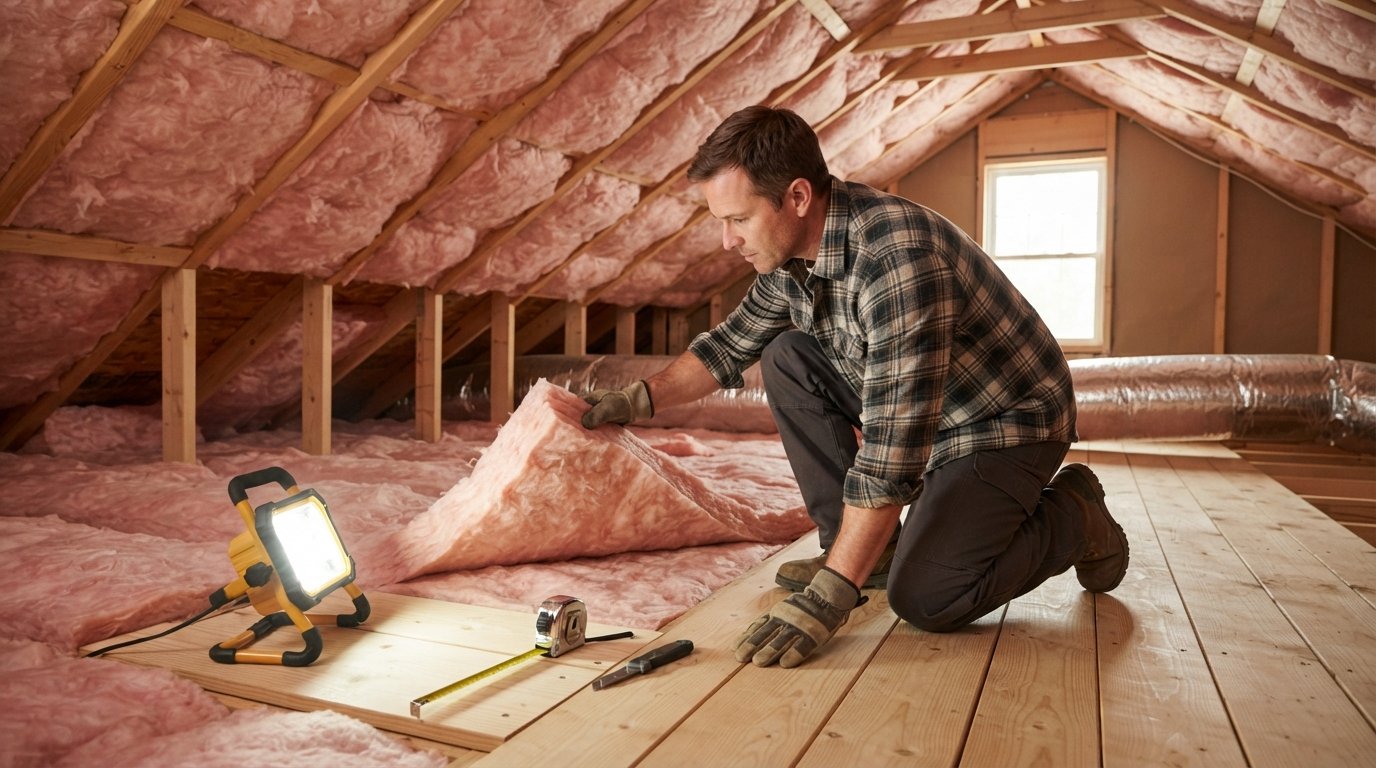
Attic Insulation Cost and Savings: A 2026 Guide
Learn how attic insulation cuts energy bills, boosts comfort, and adds value. Discover costs, types, and free quotes.

By Author 25
Learn more about Insulation Installation or Upgrade for guides, costs, and what to expect.
Compare Insulation Installation or Upgrade Pros Near You

Enter your ZIP code to compare top-rated local professionals and request free quotes.
Your attic is one of the most important spaces in your home, yet most homeowners rarely think about it. Hidden above your ceiling, it plays a critical role in regulating your home's temperature, protecting your roof, and controlling your energy bills. If your attic lacks proper insulation, you could be losing significant heat in winter and letting cool air escape in summer, forcing your HVAC system to work harder and driving up your utility costs. In fact, the U.S. Department of Energy estimates that proper attic insulation can reduce heating and cooling costs by up to 15 percent, making it one of the most cost-effective home improvements available.
But how do you know if your attic insulation is adequate? What type should you choose? How much should you expect to pay? And how do you find a reliable contractor to do the job? This guide answers those questions and more, helping you make an informed decision that boosts comfort, saves money, and increases your home's value.
Signs Your Attic Insulation Needs Attention
Before you invest in new attic insulation, you need to determine whether your current insulation is underperforming. Several warning signs indicate that your insulation is no longer doing its job effectively.
High and fluctuating energy bills are often the first clue. If your heating and cooling costs spike during extreme weather months, your insulation may be allowing conditioned air to escape. Another common sign is uneven temperatures between rooms. If some rooms feel drafty or much colder than others, your attic insulation may be uneven or compressed.
You might also notice ice dams forming on your roof during winter. These occur when heat escapes through the attic, melting snow on the roof, which then refreezes at the eaves. Additionally, if your attic feels excessively hot in summer or freezing in winter, that is a direct indication of poor insulation. Finally, if you can see bare attic floor joists or insulation that is damp, moldy, or rodent-damaged, it is time for replacement.
Understanding R-Value and Recommended Levels
R-value measures thermal resistance, meaning how well insulation slows heat transfer. The higher the R-value, the better the insulation performs. The recommended R-value for attic insulation depends on your climate zone. For most of the United States, the U.S. Department of Energy recommends an R-value between R-30 and R-60. In colder northern climates, aim for R-49 to R-60. Warmer southern regions typically need R-30 to R-49.
Your existing insulation may be inadequate if it is compressed, wet, or installed improperly. To determine your current R-value, measure the insulation depth and multiply by its per-inch R-value. For example, fiberglass batts typically provide about R-3.2 per inch, so 10 inches of fiberglass would give you roughly R-32.
If you are unsure about your current insulation status, a professional contractor can conduct an energy audit. They will inspect your attic, measure existing insulation, check for air leaks, and recommend the appropriate R-value for your area. This assessment is crucial because simply adding more insulation without addressing air sealing can reduce its effectiveness.
Types of Attic Insulation: Pros and Cons
Choosing the right insulation material is essential for performance and cost. Each type has distinct characteristics that suit different needs and budgets.
- Fiberglass batts and rolls: The most common and affordable option. They come in pre-cut panels and are easy to install between standard joist spacing. However, they require careful fitting to avoid gaps and can settle over time.
- Blown-in fiberglass or cellulose: Loose-fill insulation is blown into the attic using a machine. It conforms to irregular spaces and provides excellent coverage. Cellulose is made from recycled paper and is treated for fire resistance. Blown-in insulation is ideal for attics with many obstructions.
- Spray foam insulation: This expands to fill every crack and gap, providing both insulation and an air barrier. It has the highest R-value per inch but is significantly more expensive and must be installed by professionals.
- Radiant barriers: These reflective materials are installed under the roof to reflect radiant heat away from the living space. They are most effective in hot climates and are often used alongside traditional insulation.
Fiberglass batts are the most budget-friendly, often costing between $0.50 and $1.50 per square foot. Blown-in insulation runs about $1 to $2 per square foot. Spray foam costs between $3 and $5 per square foot, but its superior performance can justify the higher price for many homeowners.
Consider your local climate, attic accessibility, and budget when choosing. For example, if you have a finished attic with limited access, blown-in insulation is often easier to install. If you have significant air leakage, spray foam provides the best seal. A professional contractor can help you evaluate these factors and recommend the most suitable option.
Cost to Insulate an Attic: What to Expect
The total cost of attic insulation depends on several variables, including attic size, insulation type, existing conditions, and labor rates in your area. On average, homeowners pay between $1,500 and $3,500 for a professional attic insulation project, with most spending around $2,500. For a typical 1,200 square foot attic, fiberglass batts cost between $600 and $1,200 for materials, while blown-in cellulose costs $700 to $1,500. Spray foam is the most expensive, ranging from $2,000 to $5,000 or more.
Labor costs add another $500 to $1,500, depending on the complexity of the job. If your attic requires air sealing, additional repairs, or removal of old insulation, expect higher costs. You may also need to install ventilation baffles to ensure proper airflow, which adds about $50 to $200.
While the upfront cost may seem significant, attic insulation offers one of the highest returns on investment of any home improvement. The energy savings alone often pay for the project within two to four years. Additionally, many utility companies offer rebates or incentives for upgrading insulation, which can reduce your out-of-pocket expense. Check with your local utility provider and the Database of State Incentives for Renewables and Efficiency (DSIRE) for available programs.
DIY vs. Professional Installation
Some homeowners consider installing attic insulation themselves to save money. While DIY is possible for fiberglass batts, it comes with significant challenges. You must work in tight, dusty spaces, handle itchy materials, and ensure proper coverage without compressing the insulation. You also need to seal all air gaps and avoid blocking ventilation, which is more complex than it sounds.
Professional installation offers several benefits. Contractors have the right safety equipment, including respirators and protective clothing. They know how to handle obstacles like wiring, ductwork, and recessed lighting. They also have access to equipment for blown-in insulation and spray foam, which is not practical for DIY. Most importantly, a professional will perform a thorough air sealing before adding insulation, which is critical for maximizing energy efficiency.
Given the technical requirements and safety concerns, professional installation is strongly recommended for most homeowners. USremodel makes it easy to connect with qualified insulation contractors in your area. By submitting a free quote request, you can receive multiple customized estimates from vetted professionals, allowing you to compare prices and choose the best fit for your project.
Air Sealing: The Essential First Step
Before adding new insulation, your attic must be air-sealed. Air leaks bypass insulation entirely, allowing heated or cooled air to escape and outside air to enter. Common leak locations include gaps around pipes, wires, chimneys, recessed lighting, and access hatches. Sealing these gaps with caulk or expanding foam is crucial for achieving the full benefit of your insulation.
Professional contractors will inspect your attic for air leaks and seal them as part of the installation process. This step can dramatically improve comfort and reduce energy loss. It also prevents moisture from entering the attic, which can lead to mold growth and structural damage. While air sealing adds to the project cost, it is an investment that enhances the effectiveness of your insulation and protects your home.
Ventilation and Moisture Control
Proper attic ventilation works hand-in-hand with insulation to maintain a healthy home. Ventilation allows hot, humid air to escape in summer and prevents ice dams in winter. It also helps control moisture, which can degrade insulation and cause rot. The general rule is to have one square foot of ventilation for every 300 square feet of attic floor space.
When installing insulation, contractors must ensure that vents are not blocked. Baffles are installed at the eaves to create a channel for airflow while keeping insulation in place. If your attic lacks adequate ventilation, it may need additional soffit, ridge, or gable vents. A professional can assess your ventilation needs and recommend solutions that work with your insulation.
Hiring the Right Contractor
Choosing the right contractor for your attic insulation project is essential for quality results. Look for licensed and insured professionals with experience in insulation installation. Ask for references and read online reviews. Verify that they are familiar with local building codes and energy efficiency standards.
USremodel simplifies this process by connecting you with a network of independent contractors who specialize in insulation and other home improvement services. You can request free, customized quotes from multiple professionals in your area, allowing you to compare pricing, credentials, and approach. This saves you time and ensures you find a contractor who meets your needs.
When interviewing candidates, ask about their air sealing process, the type and R-value of insulation they recommend, and whether they provide a warranty. Get a detailed written estimate that includes materials, labor, and any additional costs. A reputable contractor will be transparent and answer all your questions.
Maximizing Energy Efficiency Beyond Insulation
While attic insulation is a powerful upgrade, combining it with other energy efficiency measures can amplify your savings. Sealing air leaks in your home's exterior, upgrading to energy-efficient windows, and ensuring your HVAC system is properly maintained all contribute to lower energy bills. Installing a programmable thermostat can also help optimize heating and cooling schedules.
Consider adding reflective foil insulation under your roof if you live in a hot climate. This radiant barrier reduces heat gain in summer, making your home more comfortable and reducing air conditioning loads. For comprehensive energy efficiency, you might also explore solar panel installation, which can offset your electricity usage further. USremodel can connect you with contractors for these additional upgrades as well.
In summary, attic insulation is a smart investment for any homeowner. It improves comfort, reduces energy bills, prevents moisture issues, and increases property value. By understanding your options, costs, and the importance of professional installation, you can make a confident decision that benefits your home for years to come. Request free quotes today and take the first step toward a more efficient and comfortable living space.
Learn more about Insulation Installation or Upgrade for guides, costs, and what to expect.
Compare Insulation Installation or Upgrade Pros Near You
Enter your ZIP code to compare top-rated local professionals and request free quotes.