
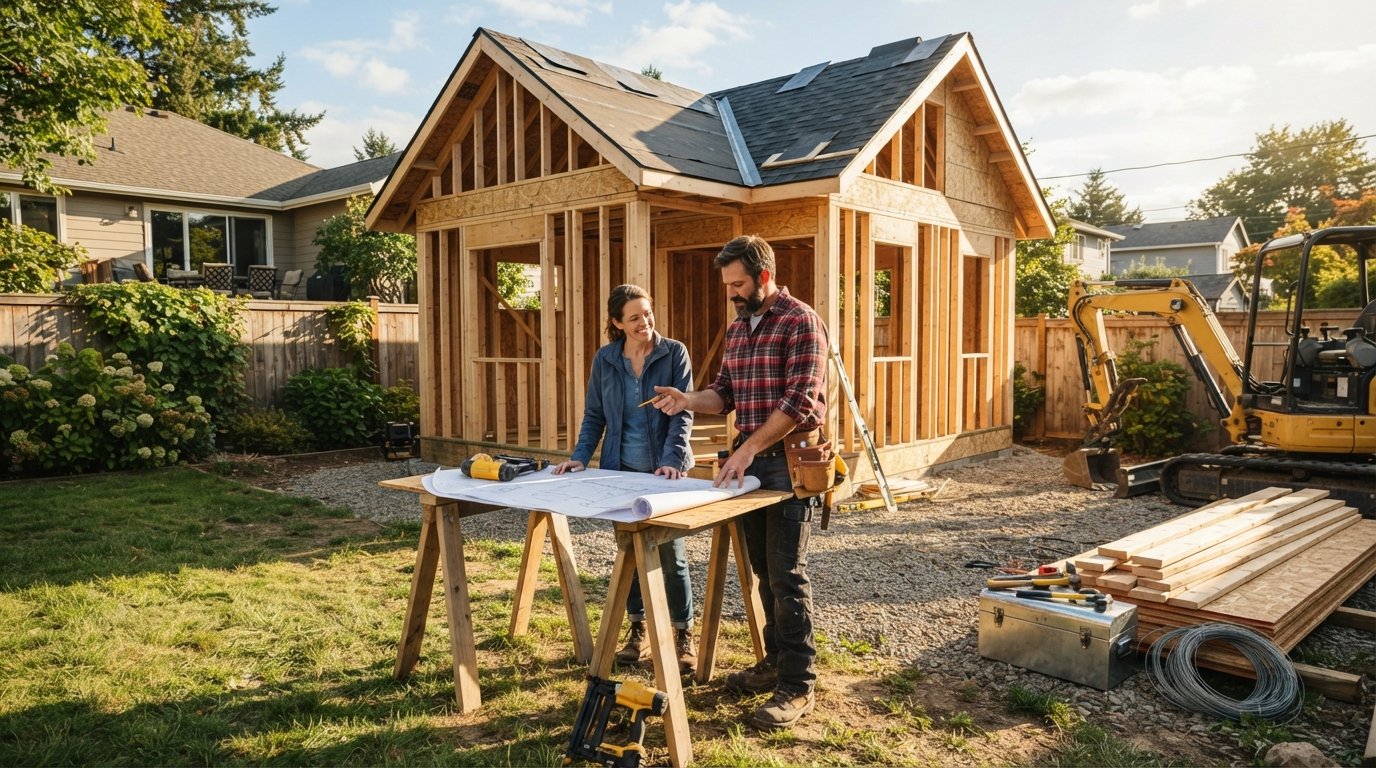
ADU Construction: Costs, Permits, and Timelines
Learn the essential steps for ADU construction, including costs, permits, timelines, and how to find the right contractor for your project.
By Peter Hubert
Learn more about New Home Construction for guides, costs, and what to expect.
Compare New Home Construction Pros Near You

Enter your ZIP code to compare top-rated local professionals and request free quotes.
Adding an accessory dwelling unit (ADU) to your property is one of the most effective ways to increase home value, generate rental income, or create a private space for family. Whether you are planning a backyard cottage, a garage conversion, or a basement apartment, understanding the full scope of ADU construction is critical to avoiding costly mistakes. This guide breaks down the essential steps, from budgeting and permits to hiring the right contractor, so you can approach your project with confidence and clarity.
Understanding ADU Construction Basics
An accessory dwelling unit is a secondary housing structure on a single-family lot. It has its own kitchen, bathroom, and sleeping area, and it can be attached to the primary home, built as a detached structure, or created from existing space like a garage or basement. ADU construction has grown in popularity because it offers a practical solution for multigenerational living, rental income, and increased property value.
Before you start designing or budgeting, you need to understand local zoning laws and building codes. Many cities have specific rules about setback distances, height limits, parking requirements, and maximum unit size. Some areas also require owner-occupancy, meaning you must live in either the main house or the ADU. Researching these regulations early will save you time, money, and frustration later.
Key Steps in the ADU Construction Process
ADU construction involves several phases, each requiring careful attention and coordination. While every project is unique, most follow a similar sequence that begins with planning and ends with final inspections. By understanding this flow, you can better manage your timeline and budget.
- Feasibility study: Assess your property's zoning, utility access, and site conditions to confirm an ADU is allowed and practical.
- Design and engineering: Work with an architect or designer to create plans that meet local codes and your needs.
- Permitting and approvals: Submit your plans to the local building department and obtain all necessary permits.
- Hiring a contractor: Get multiple bids from licensed, insured contractors who specialize in ADU construction or similar residential projects.
- Construction and inspections: Build the unit, pass all required inspections, and complete any final corrections.
Each step can take longer than expected, especially if your jurisdiction has a high volume of permit applications or if your site has unexpected challenges like poor soil or limited utility capacity. A good contractor can help you navigate these hurdles and keep the project moving.
How Much Does ADU Construction Cost?
Cost is often the biggest concern for homeowners considering an ADU. Nationally, the average price for a detached ADU ranges from $150,000 to $300,000, depending on size, materials, and location. Garage conversions tend to be cheaper, typically between $80,000 and $150,000, because the structure already exists. However, these figures are just starting points; your final cost will depend on many variables.
Key cost factors include site preparation, foundation type, utility connections, interior finishes, and labor rates in your area. For example, a simple studio unit with basic finishes will cost far less than a two-bedroom unit with high-end appliances and custom cabinetry. Unexpected expenses can also arise, such as upgrading the main home's electrical panel or sewer line to handle the additional load. To avoid surprises, include a contingency fund of at least 10% to 15% of your total budget.
Financing Options for Your ADU Project
Most homeowners do not have enough cash on hand to pay for an ADU outright, so financing is often necessary. Fortunately, there are several options available, each with its own pros and cons. The right choice depends on your financial situation, equity, and long-term goals.
- Home equity loan or HELOC: Borrow against your home's equity with a fixed-rate loan or a line of credit; good for those with significant equity.
- Cash-out refinance: Replace your existing mortgage with a larger one and take the difference in cash; may offer lower rates but increases your loan balance.
- FHA 203(k) loan: A government-backed loan that covers purchase and renovation costs; only for owner-occupied properties.
- Fannie Mae HomeStyle Renovation loan: A conventional mortgage that includes renovation costs; flexible but often requires higher credit scores.
- Local grants and programs: Some cities and states offer grants, low-interest loans, or tax incentives for ADU construction, especially for affordable housing initiatives.
Before committing to any financing method, calculate your monthly payments and compare them against your expected rental income or added property value. A financial advisor or mortgage broker can help you understand the long-term implications. Also, consider that some lenders have specific requirements for ADUs, such as appraisal rules or minimum property standards.
Choosing the Right Contractor for ADU Construction
Selecting a qualified contractor is perhaps the most important decision you will make. A skilled professional can manage the entire process, coordinate subcontractors, and ensure the final result meets your expectations and local codes. Conversely, a poor choice can lead to delays, budget overruns, and subpar workmanship. Therefore, take your time to research and interview multiple candidates.
Start by asking for recommendations from friends, family, or your local real estate agent. Then, verify each candidate's license, insurance, and bonding status. Look at their portfolio of completed ADU projects or similar residential construction. Request references and follow up with them, asking about their experience, communication, and any issues that arose. Finally, get at least three written bids and compare them carefully, not just on price but also on scope, materials, and timeline.
When you are ready to hire, a platform like USremodel can simplify the process by connecting you with vetted independent contractors in your area. Through USremodel, you can receive multiple quotes from local professionals who specialize in ADU construction and other home improvement projects. This service is free for homeowners and helps you make an informed choice without the hassle of cold-calling contractors.
Permits and Regulations: What You Need to Know
Getting the right permits is a non-negotiable part of ADU construction. Building permits ensure your project meets safety, structural, and zoning standards, which protects you and future occupants. The permitting process can be complex, so working with a contractor who knows the local system is a huge advantage.
Expect to submit detailed plans, including site surveys, floor plans, elevations, and sometimes structural calculations. Your local building department will review these documents and may request changes before issuing a permit. Once approved, you will need to schedule inspections at key stages, such as foundation, framing, plumbing, electrical, and final occupancy. These inspections confirm that the work complies with codes and is safe for habitation.
Some jurisdictions have streamlined their ADU permitting process due to recent state laws that encourage ADU development. For example, California and Oregon have passed legislation to reduce barriers and expedite approval for qualifying projects. Check with your local planning department to see if your project qualifies for expedited review, which can save weeks or even months.
Designing Your ADU for Maximum Value
Good design is about more than aesthetics; it directly affects functionality, comfort, and return on investment. A well-designed ADU should feel spacious, even if it is small, and include smart storage solutions, natural light, and energy-efficient features. These elements not only enhance livability but also appeal to potential renters or buyers.
Consider the layout carefully. Open floor plans with a combined living, dining, and kitchen area create a sense of space. Use built-in furniture, like Murphy beds or fold-down tables, to maximize versatility. Large windows and skylights bring in daylight and make the unit feel bigger. Energy-efficient windows, insulation, and appliances reduce utility bills and may qualify for rebates. Also, think about outdoor access; a private entrance and a small patio or deck can significantly increase the unit's appeal.
If your budget allows, invest in high-quality finishes that are durable and easy to maintain. Quartz countertops, luxury vinyl plank flooring, and stainless steel appliances are popular choices that offer long-term value. Avoid overly trendy features that might date quickly, and instead focus on timeless, functional upgrades that will remain attractive for years.
Timeline: How Long Does ADU Construction Take?
ADU construction is not a quick project. From initial planning to final occupancy, most projects take between 8 and 18 months. The timeline depends on several factors, including the type of unit, local permitting speed, and the complexity of the build. Detached units typically take longer than garage conversions, and new constructions require more site work.
Here is a rough breakdown of a typical timeline: planning and design (1 to 3 months), permitting (1 to 4 months), and construction (3 to 6 months for a garage conversion, 5 to 9 months for a new build). Delays can happen due to weather, material shortages, or inspections failing and needing rework. To minimize delays, order materials early, maintain open communication with your contractor, and schedule inspections as soon as each phase is complete.
Rental Income and Return on Investment
One of the primary reasons homeowners build an ADU is to generate rental income. Depending on your location and the unit's size and amenities, you could rent it out for $1,000 to $2,500 per month or more. This income can offset your mortgage payments, cover maintenance costs, or provide a steady cash flow for other investments.
However, it is important to analyze the numbers before committing. Calculate your total project cost, including financing fees, and divide it by the expected annual rental income to estimate your payback period. For example, a $200,000 ADU renting for $1,500 per month would take about 11 years to recoup the investment, not accounting for expenses and appreciation. You also need to consider property taxes, insurance, and potential vacancy periods. Most experts agree that ADUs offer a solid return on investment, but the exact figures vary widely by market.
Working with USremodel for Your ADU Project
Embarking on an ADU construction project can be overwhelming, but you do not have to do it alone. USremodel connects you with experienced, licensed contractors who specialize in home additions and remodels. By submitting one simple form, you can receive free, customized quotes from multiple local professionals, allowing you to compare prices, services, and expertise.
USremodel also provides educational resources and FAQs to help you understand the process better. Whether you are planning a bathroom remodel, a kitchen renovation, or a full ADU build, the platform is designed to make contractor selection easier and more transparent. You can focus on designing your dream space while USremodel handles the legwork of finding qualified candidates.
To get started, visit USremodel.com and fill out the quote request form. It takes just a few minutes, and there is no obligation. You will receive responses from contractors who are ready to discuss your project, answer your questions, and provide accurate estimates. With the right team in place, your ADU construction project can be a smooth and rewarding experience.
Final Thoughts on ADU Construction
Building an ADU is a significant undertaking, but the benefits are clear: added living space, potential rental income, and increased property value. By understanding the costs, permits, and timelines, you can set realistic expectations and avoid common pitfalls. The key is to plan thoroughly, hire a reputable contractor, and keep communication open throughout the process.
If you are ready to explore ADU construction for your property, start by researching your local regulations and consulting with professionals. Use USremodel to connect with qualified contractors in your area and get multiple quotes that fit your budget. With careful planning and the right support, your ADU project can be a successful investment that enhances your home for years to come.
Learn more about New Home Construction for guides, costs, and what to expect.
Compare New Home Construction Pros Near You
Enter your ZIP code to compare top-rated local professionals and request free quotes.